
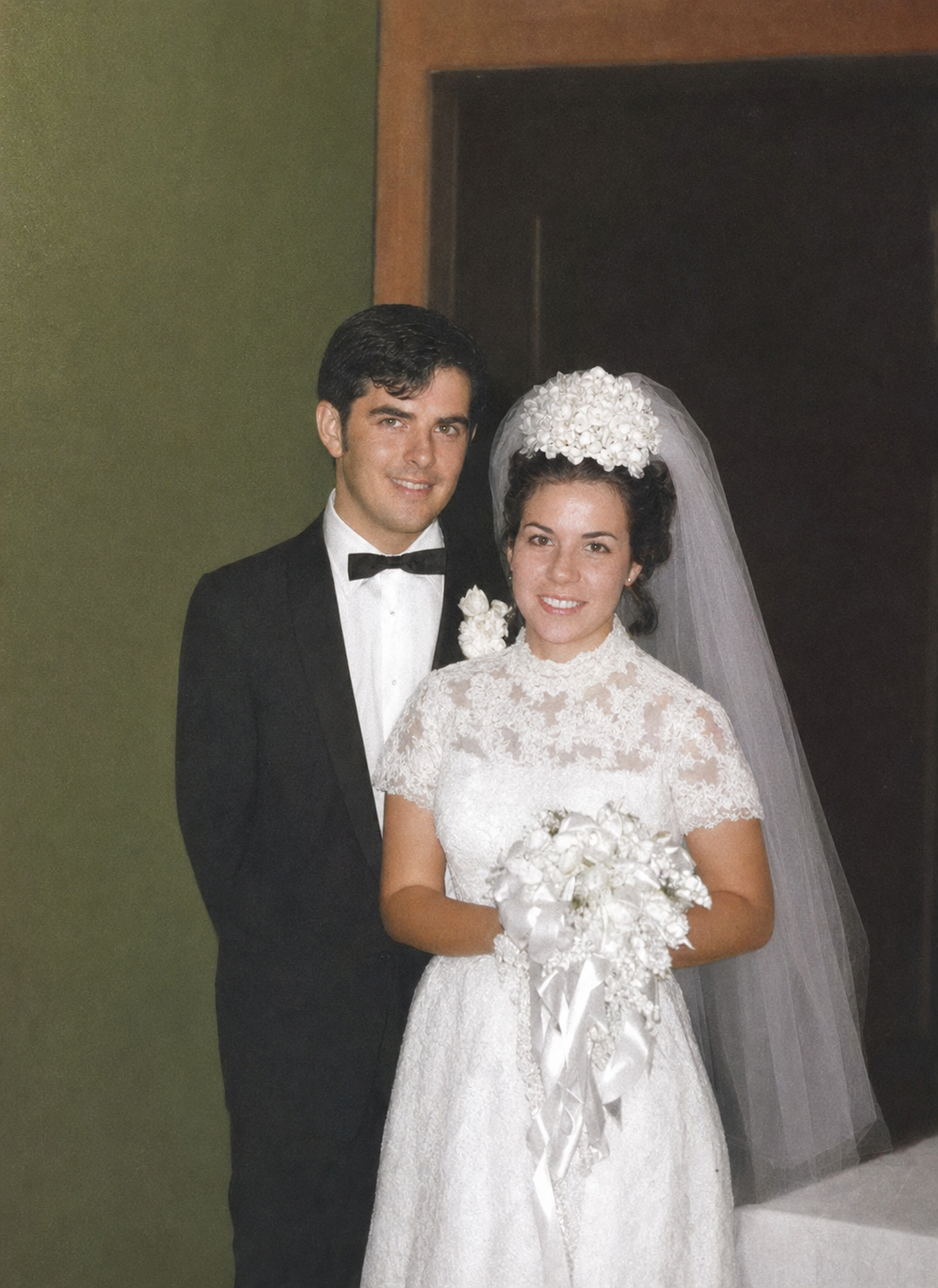
More Than Pixels: Restoring a Lost Wedding Photograph
We Restored the Only Image from Their Wedding Day
Some photographs are more than photographs.
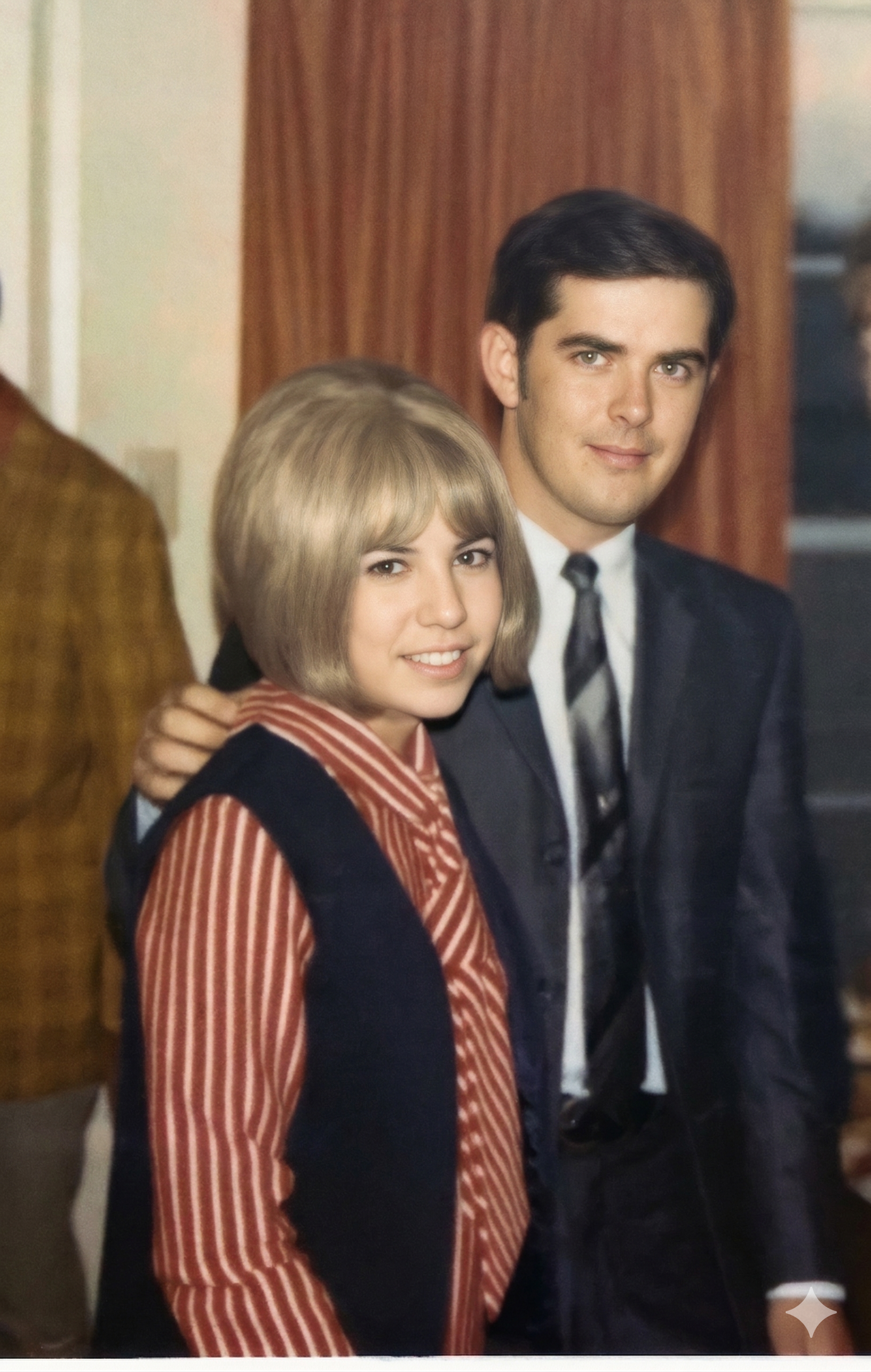
They are the only remaining proof of a moment. A face. A smile. A wedding day. A person as they were then, standing beside someone they loved, in a season of life they can never return to. That is what made this particular restoration project so meaningful.
It started when my neighbors reached out to me. They knew I was a wedding photographer, and they also knew I had experience with Photoshop, photography, and newer AI-based image restoration tools. They are in their 80s now, and they had a handful of old photographs they were hoping I might be able to help restore.
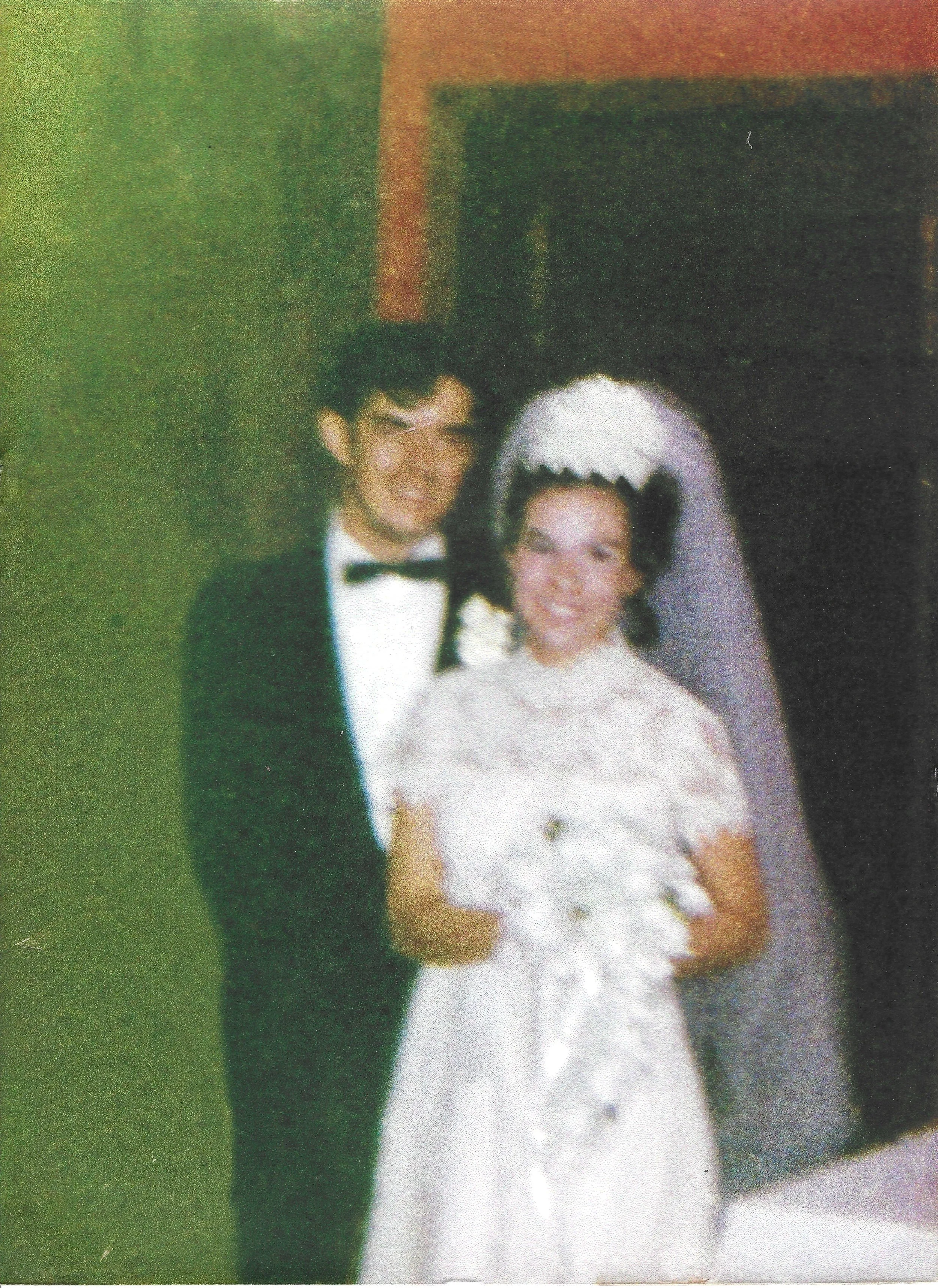
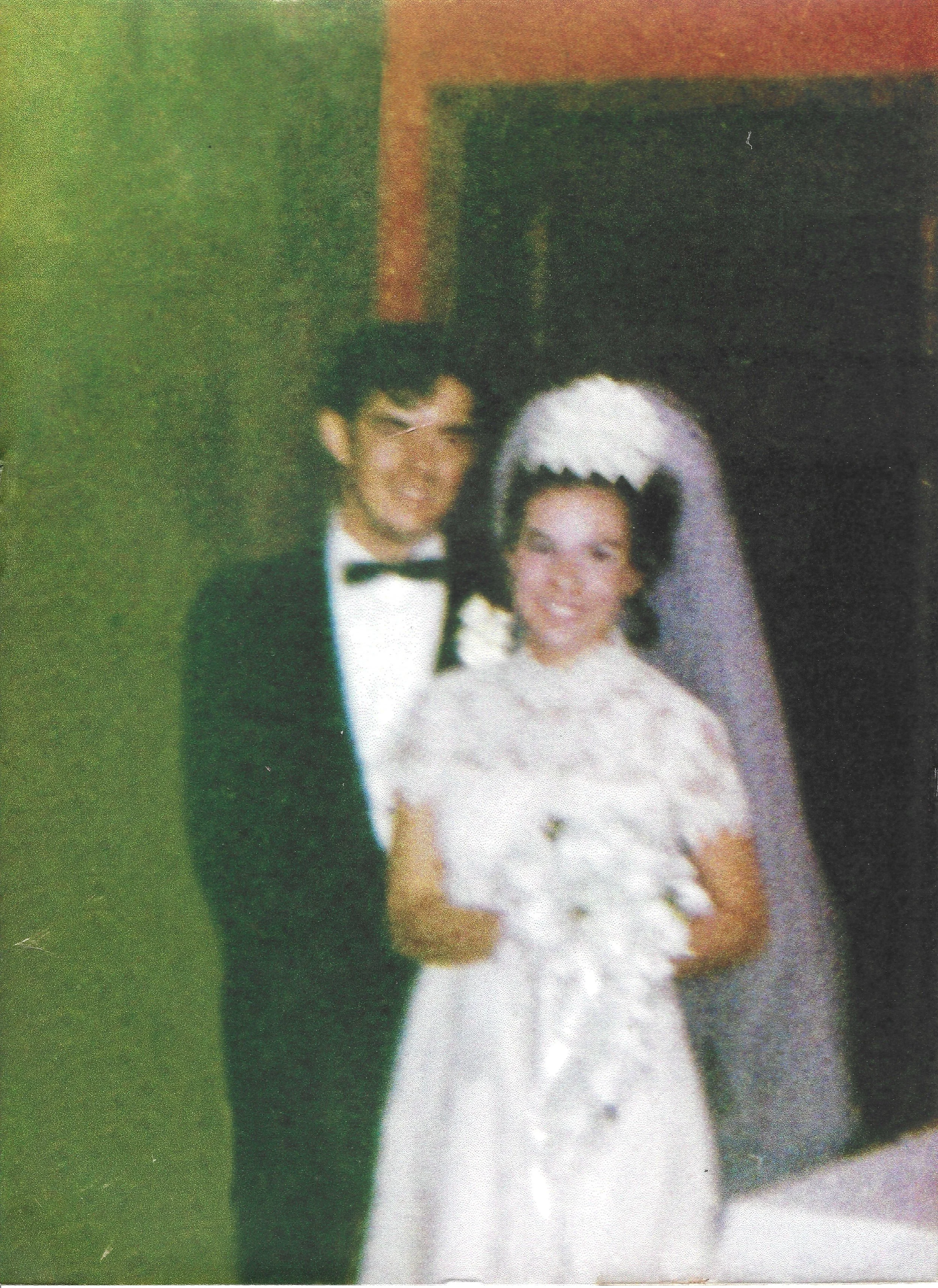
But there was one image that mattered more than the rest. It was the only photograph they had from their wedding day.
“It was the only photograph they had from their wedding day.”
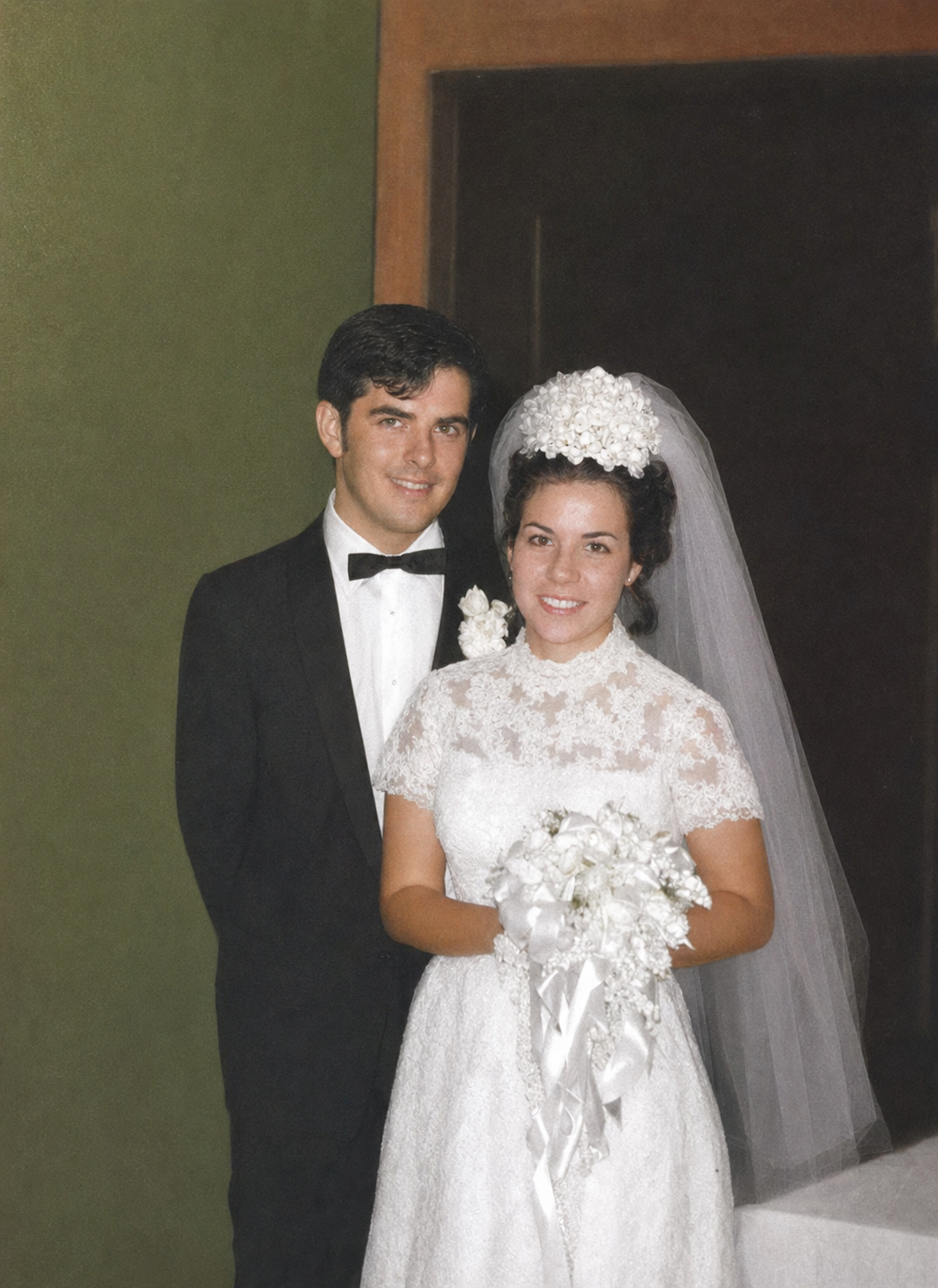
Howard & Elsa - 1970
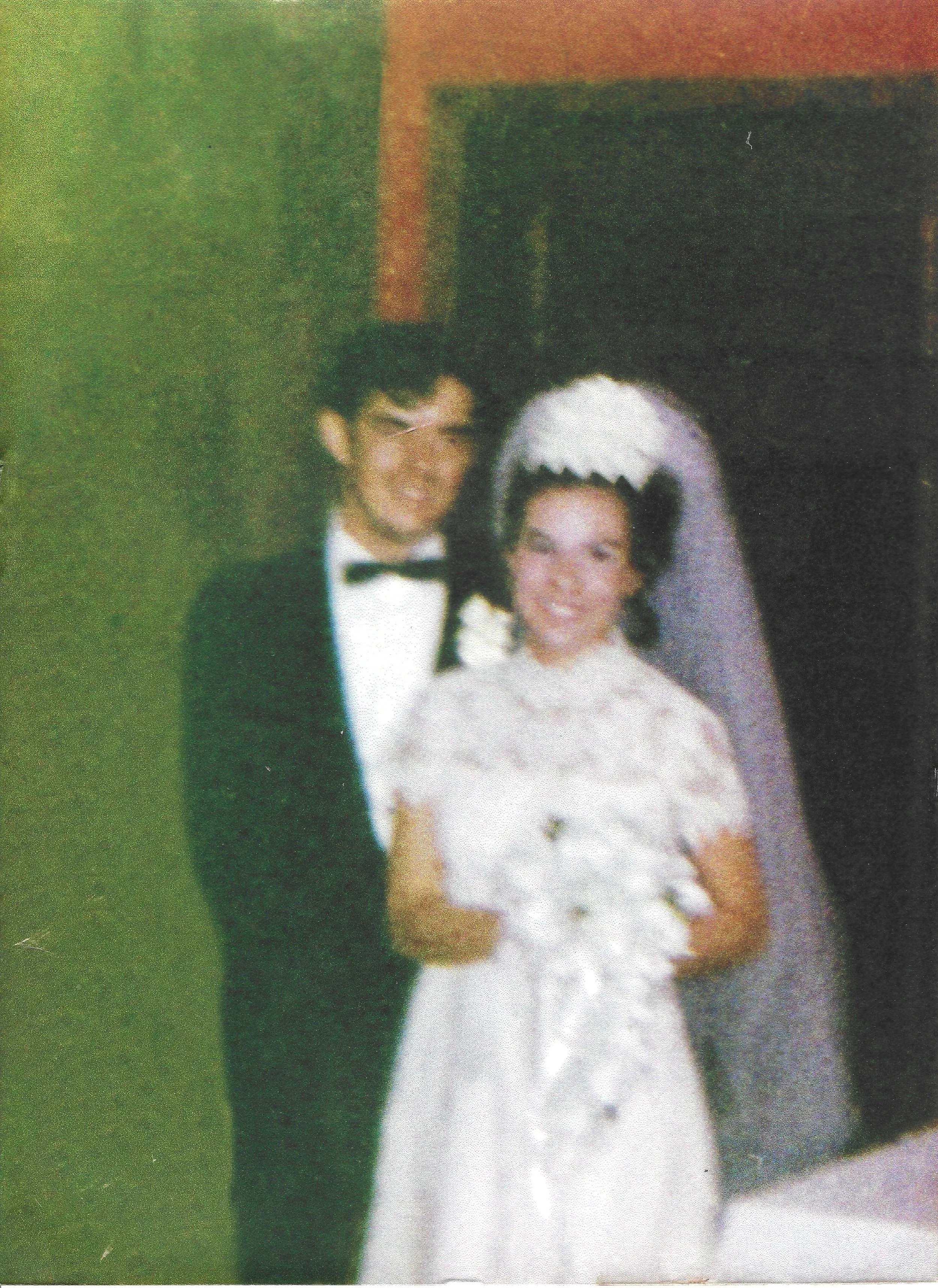
The photo had not been taken by a professional photographer. It had been taken by a friend on a disposable camera. Over the years, the original image had been lost or degraded to the point that what remained was essentially a photocopied printout on printer paper. It was blurry, grainy, faded, out of focus, and far from technically perfect.
But the essence of their wedding day was still there. A young couple. A wedding dress. A smile. A moment.
The husband wanted to restore the image as a gift for his wife. He was not asking for perfection. He simply wanted to know if there was any way to bring back even a little more life, clarity, and beauty to the only image they had from that day.
I told them the truth: it was a long shot.
But I also had hope.
With the advancements in AI, combined with years of experience in Photoshop, photography, color correction, and image repair, I believed there might be a way to recover something meaningful from what remained.
Not a fake version of the photo.
Not a completely new image.
But something closer to the original memory.
The First Step: Understanding the People in the Photograph
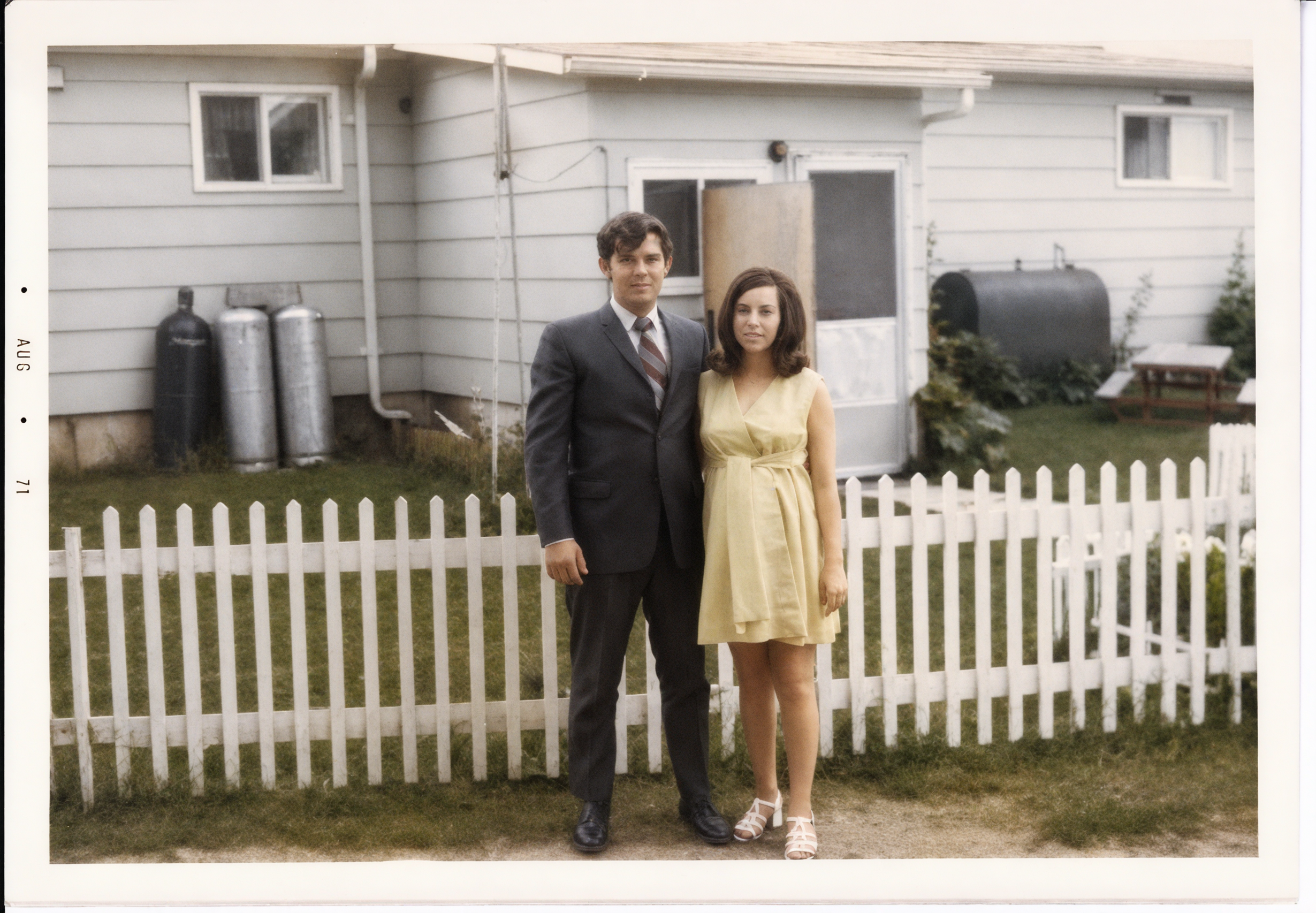
Before I could begin restoring the wedding image itself, I needed to understand what they looked like during that period of their lives.
That became one of the most important parts of the entire process.
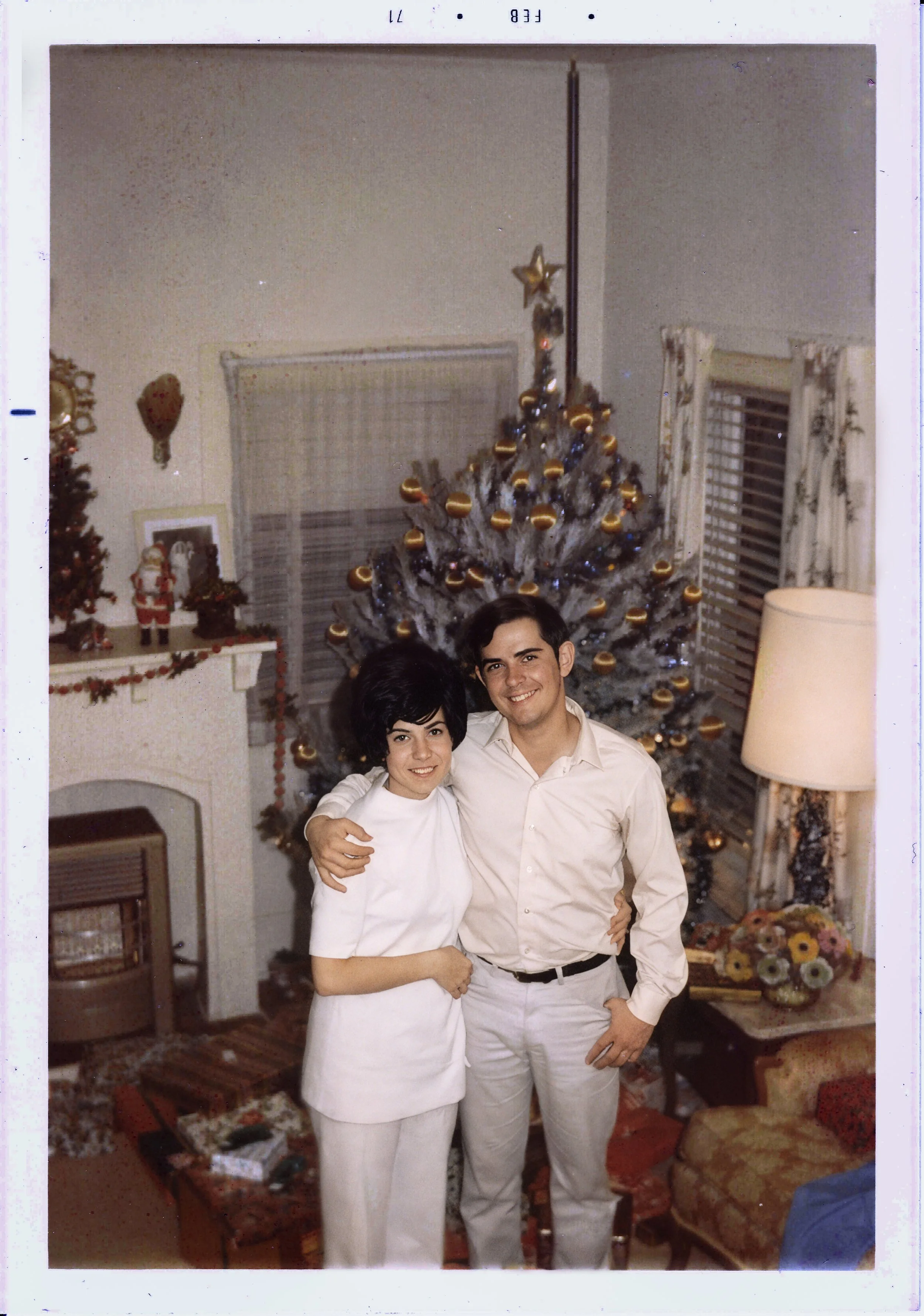
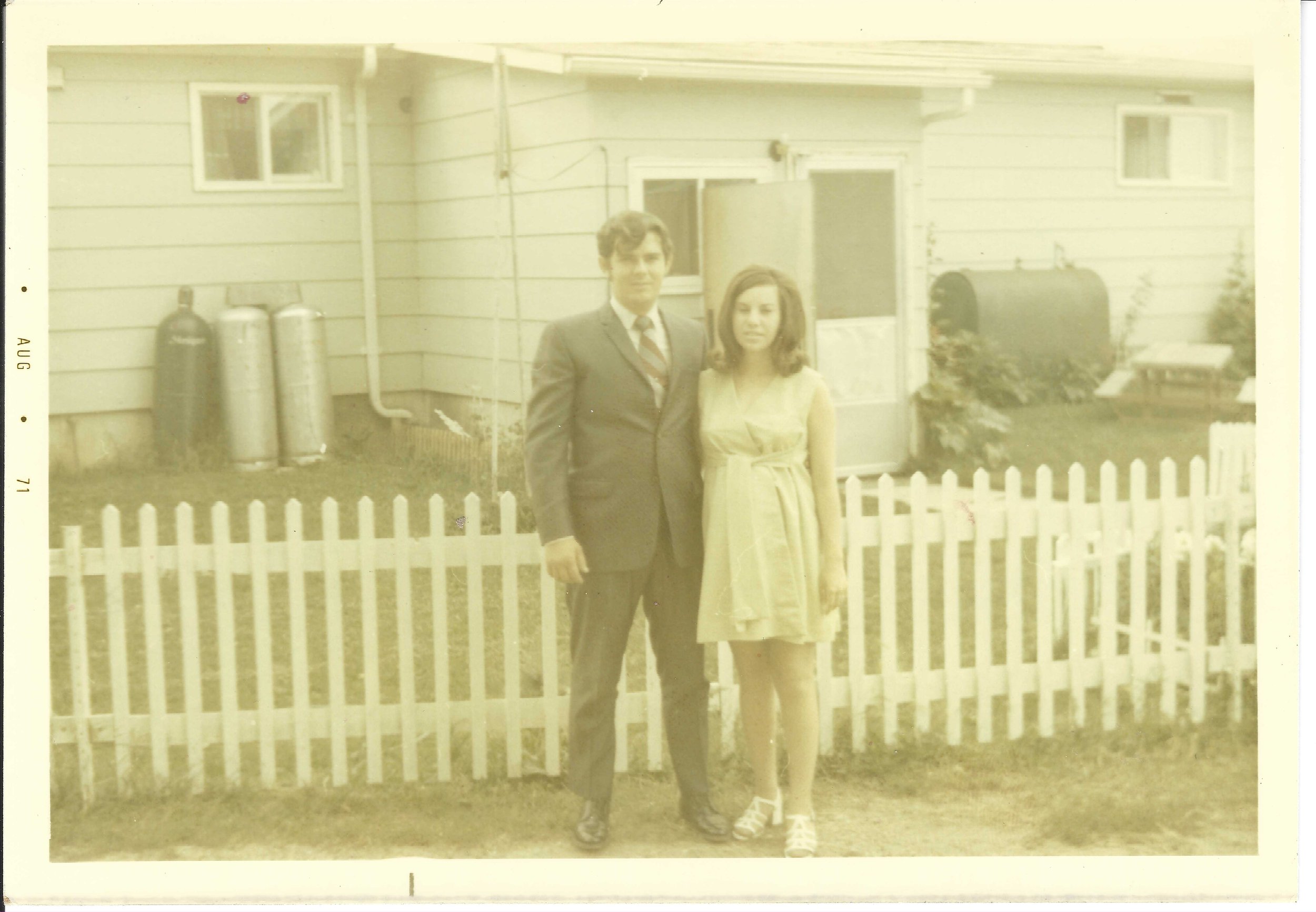
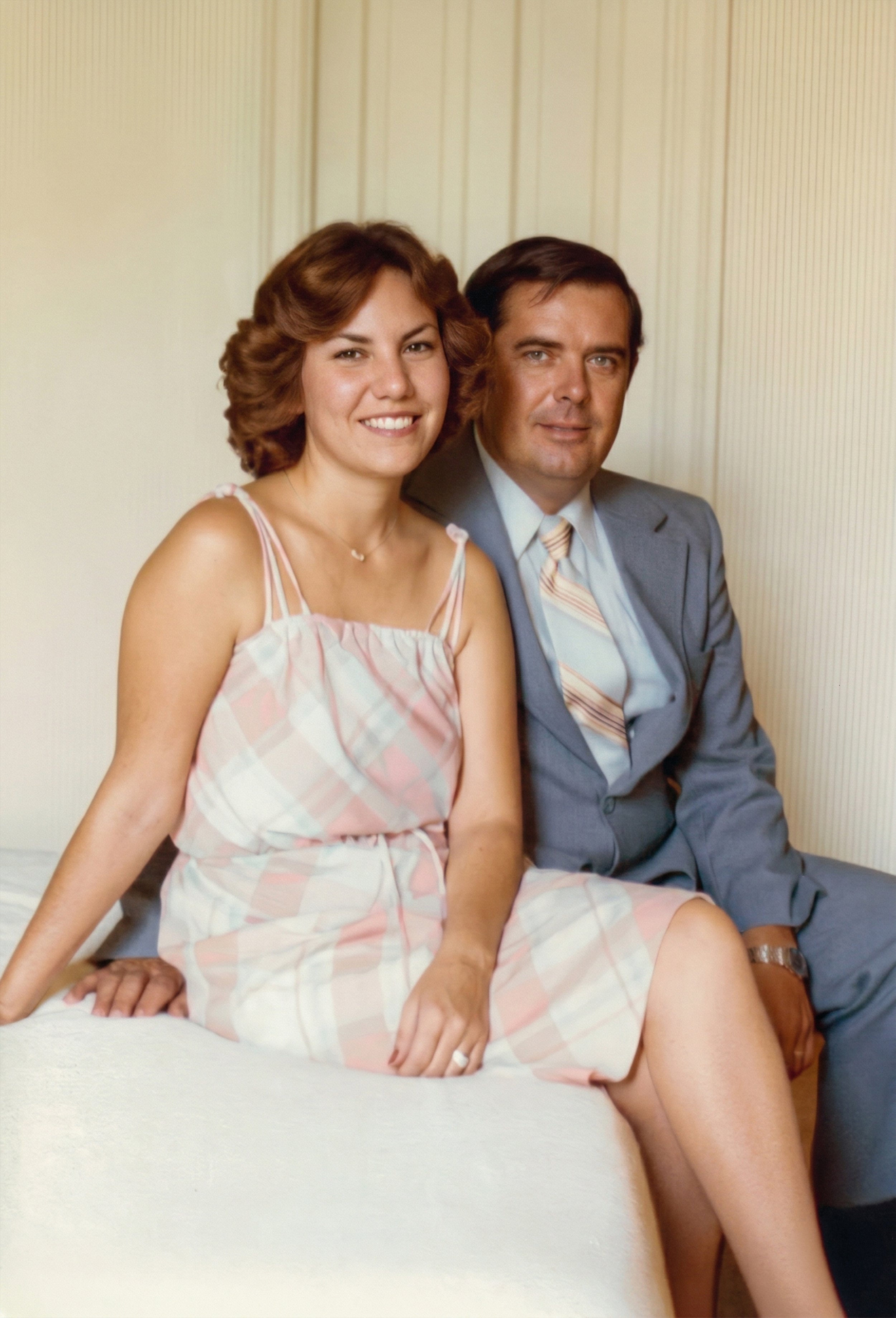
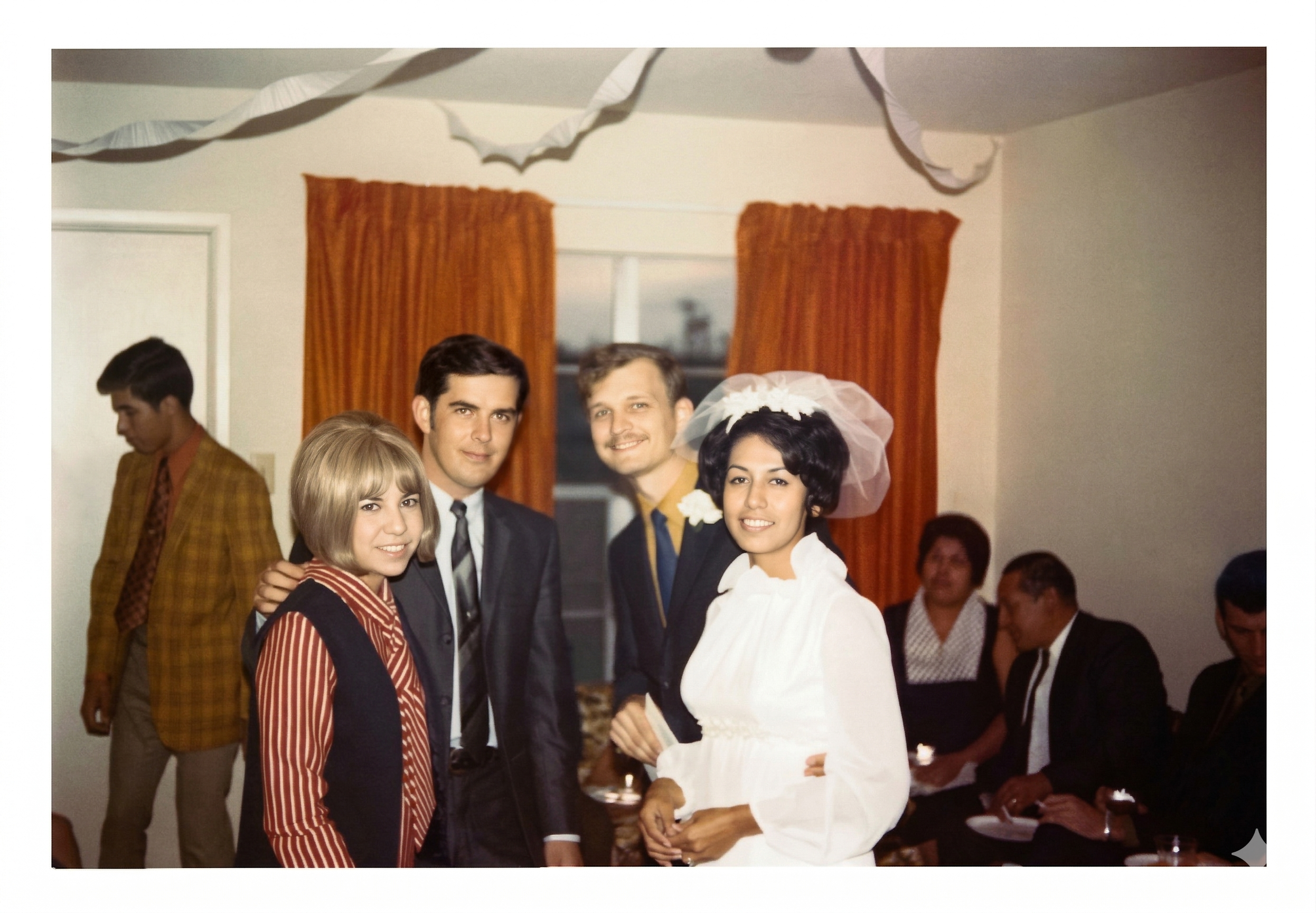
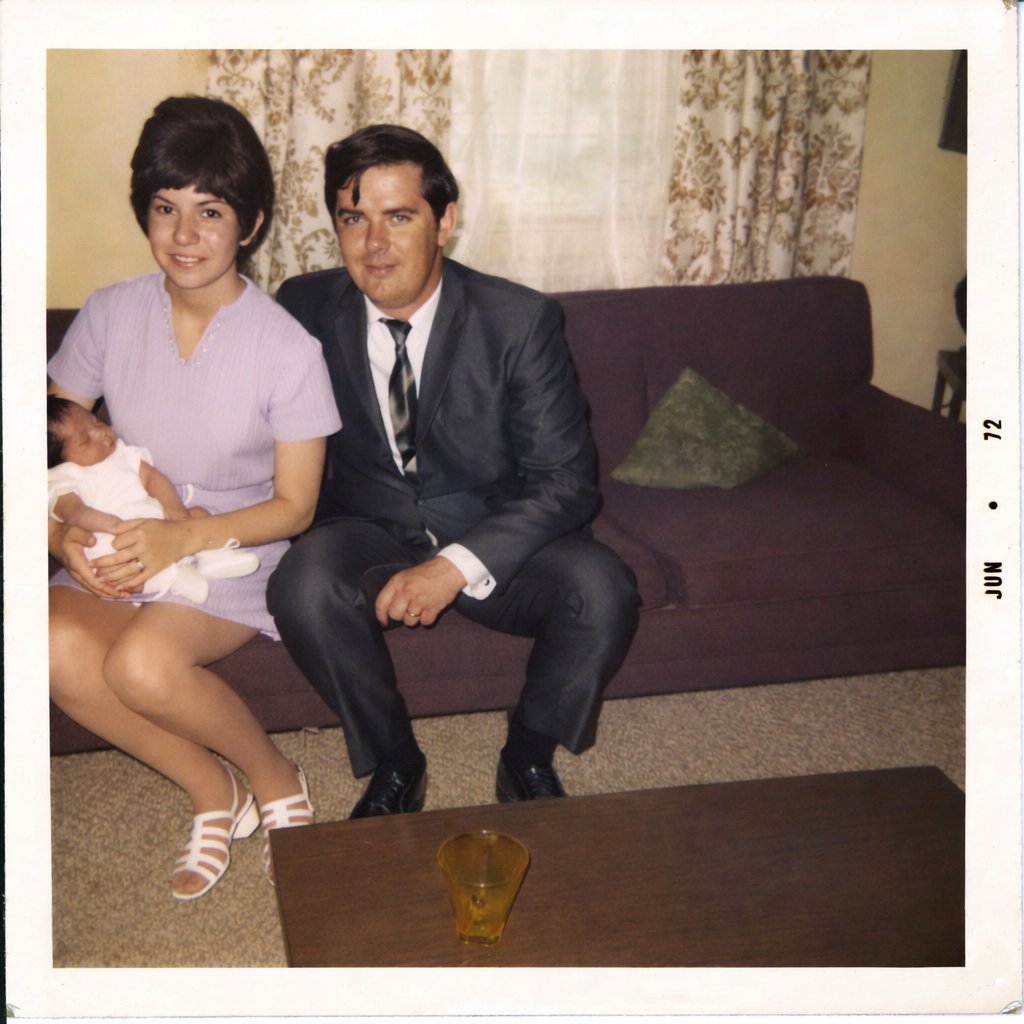
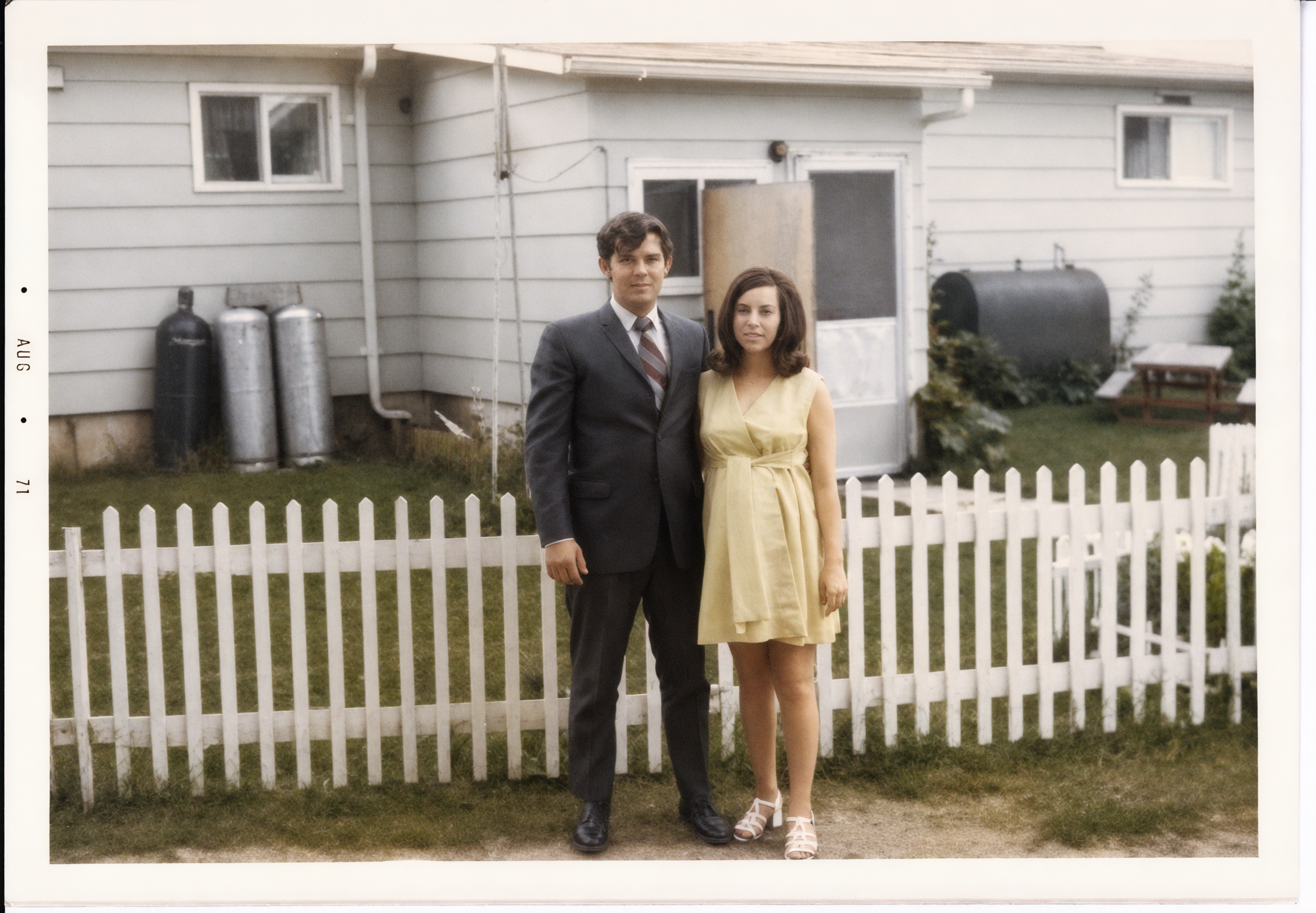
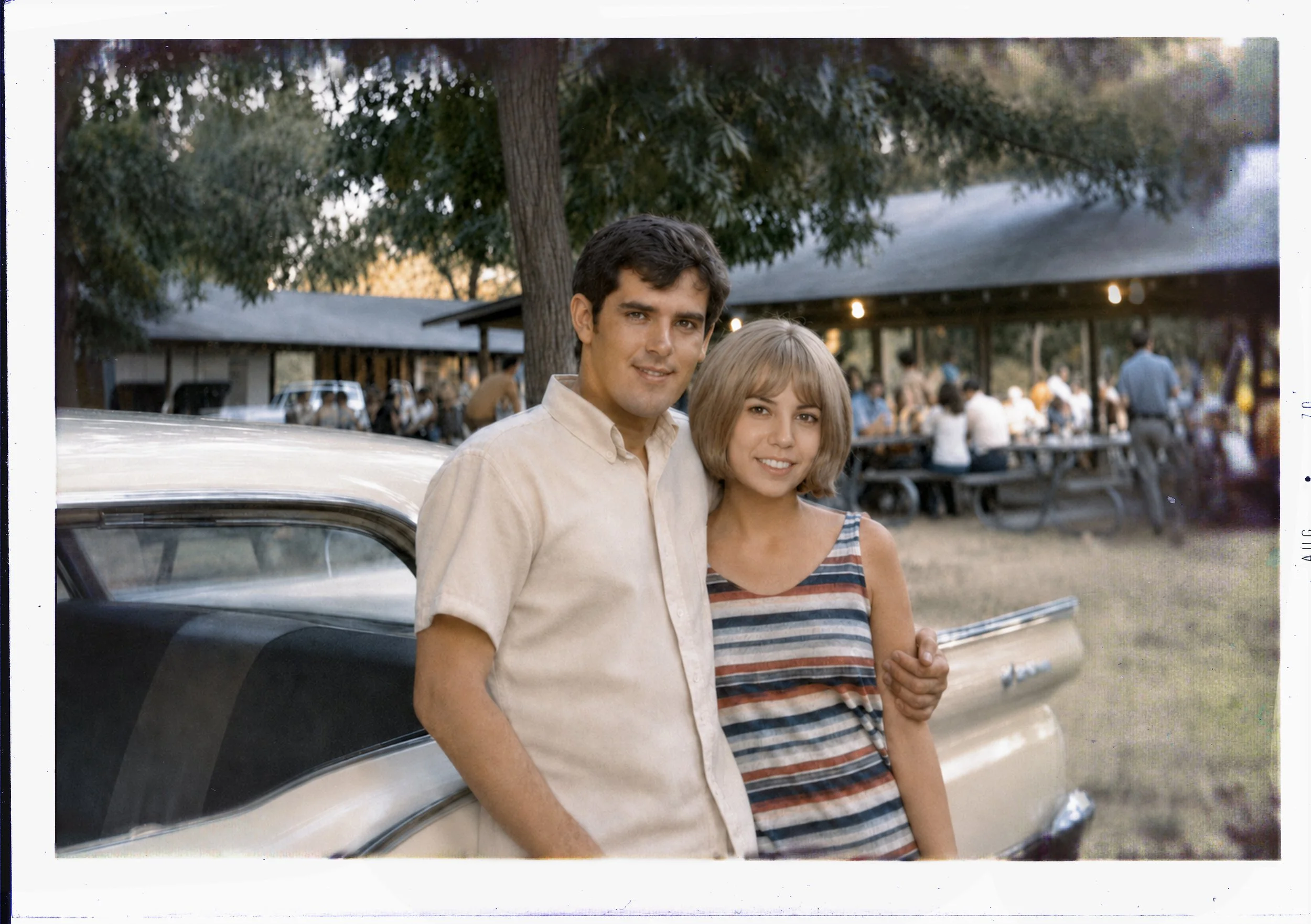
I sat down with them in person and went through their old photo albums. We looked at pictures from shortly after they were married, photos from when they were dating, pictures taken at friends’ houses, family gatherings, parties, and other moments from that same season of life.
This was not just about finding “reference images.” It was about gathering visual evidence.
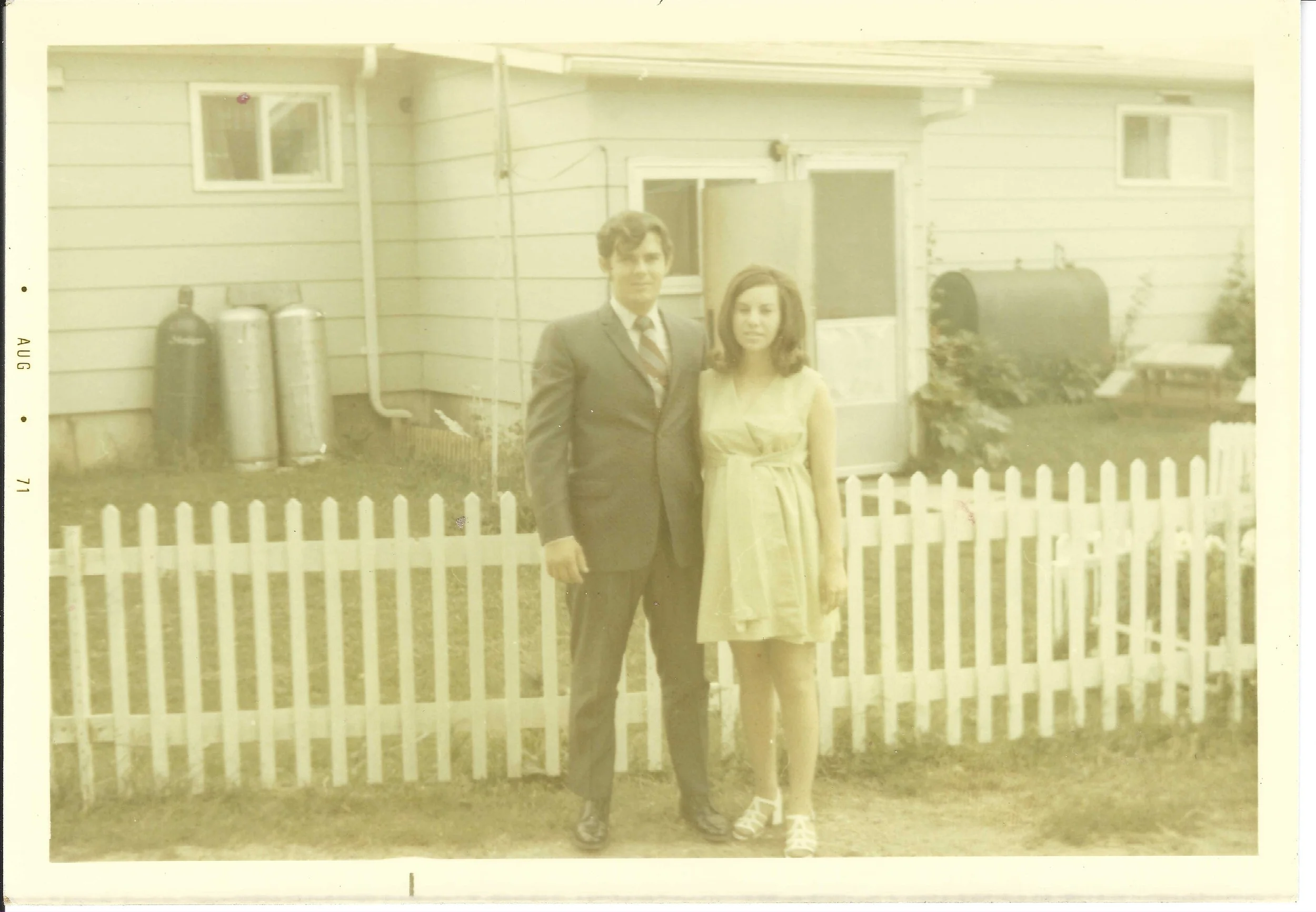
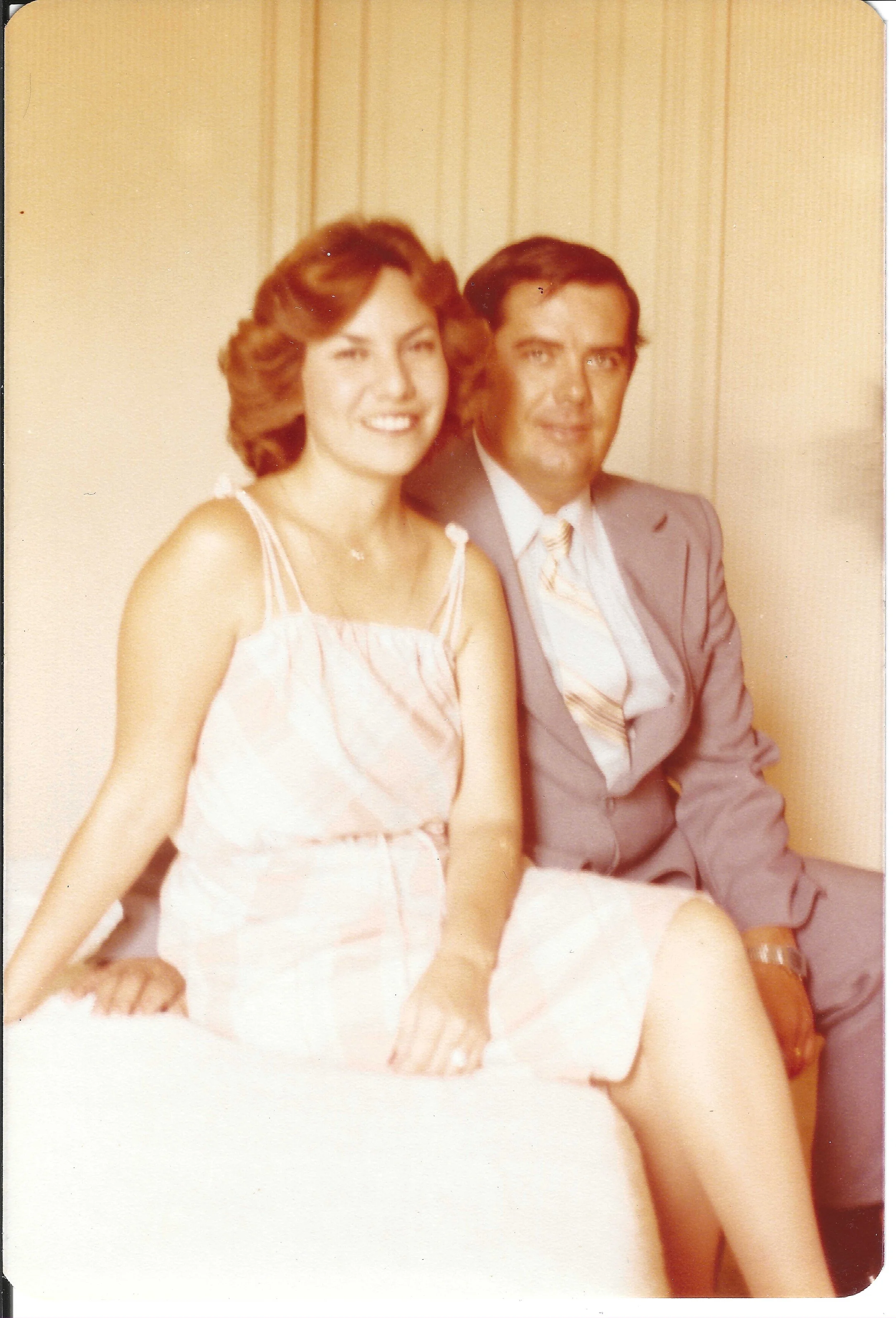
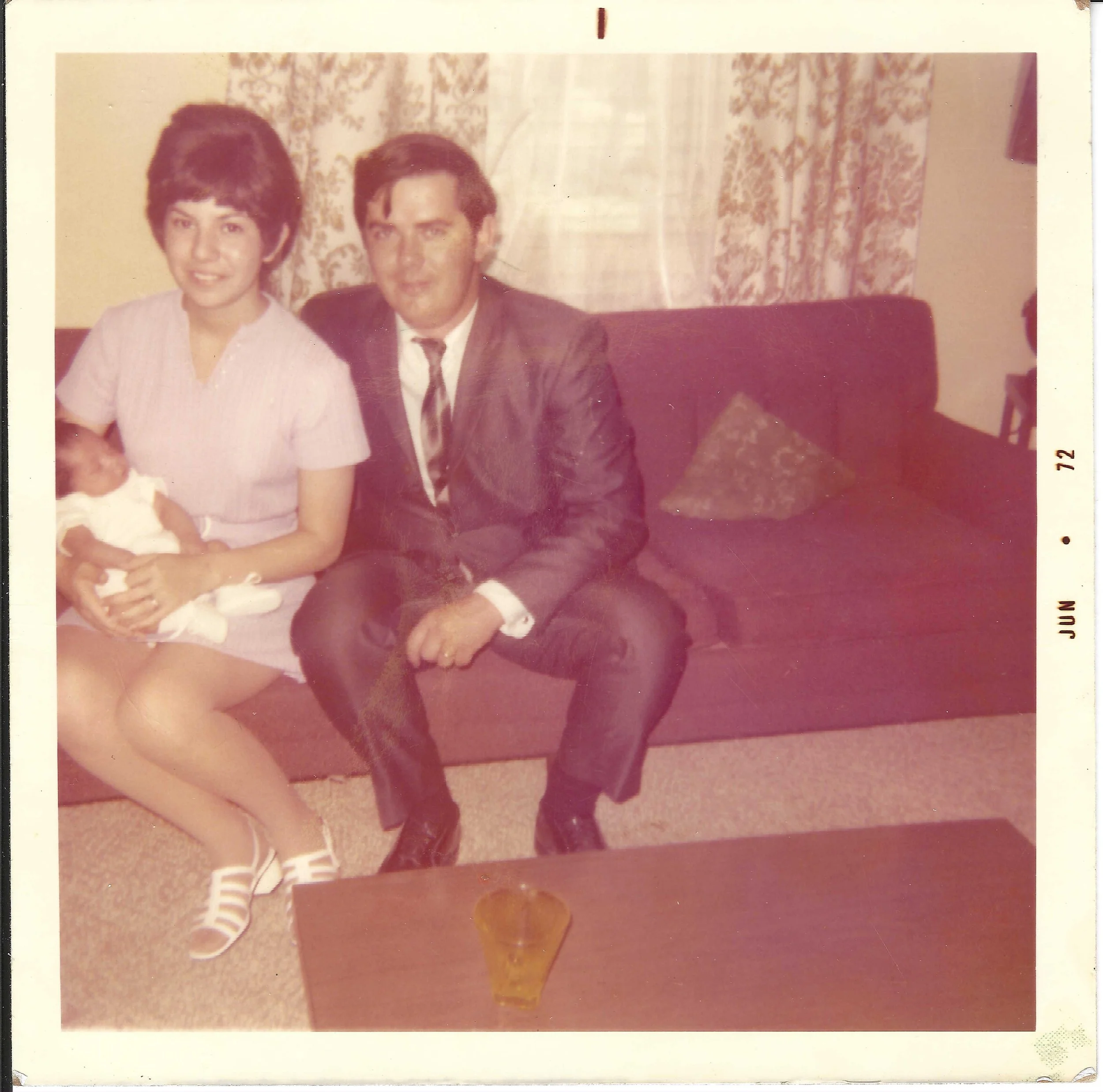
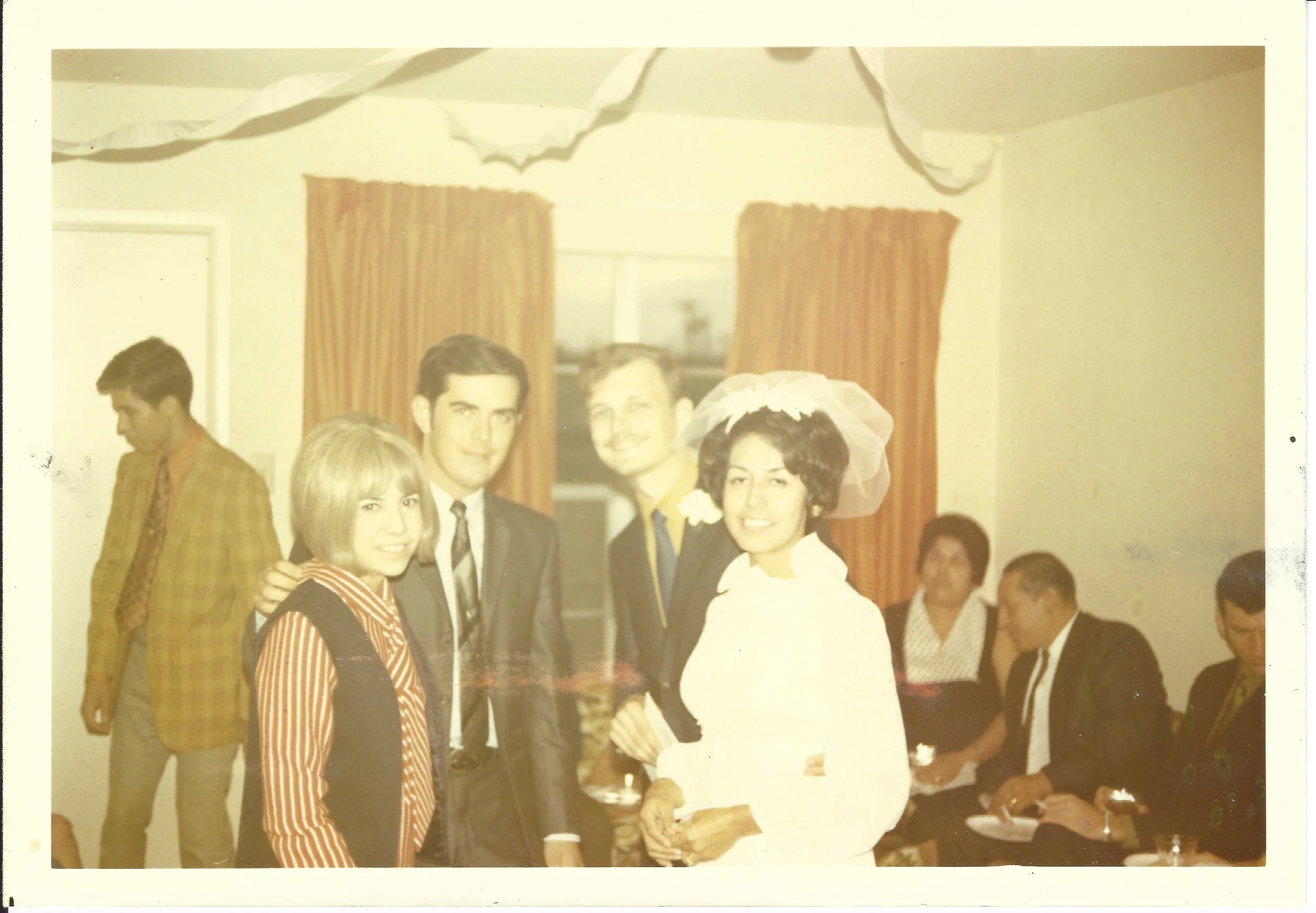
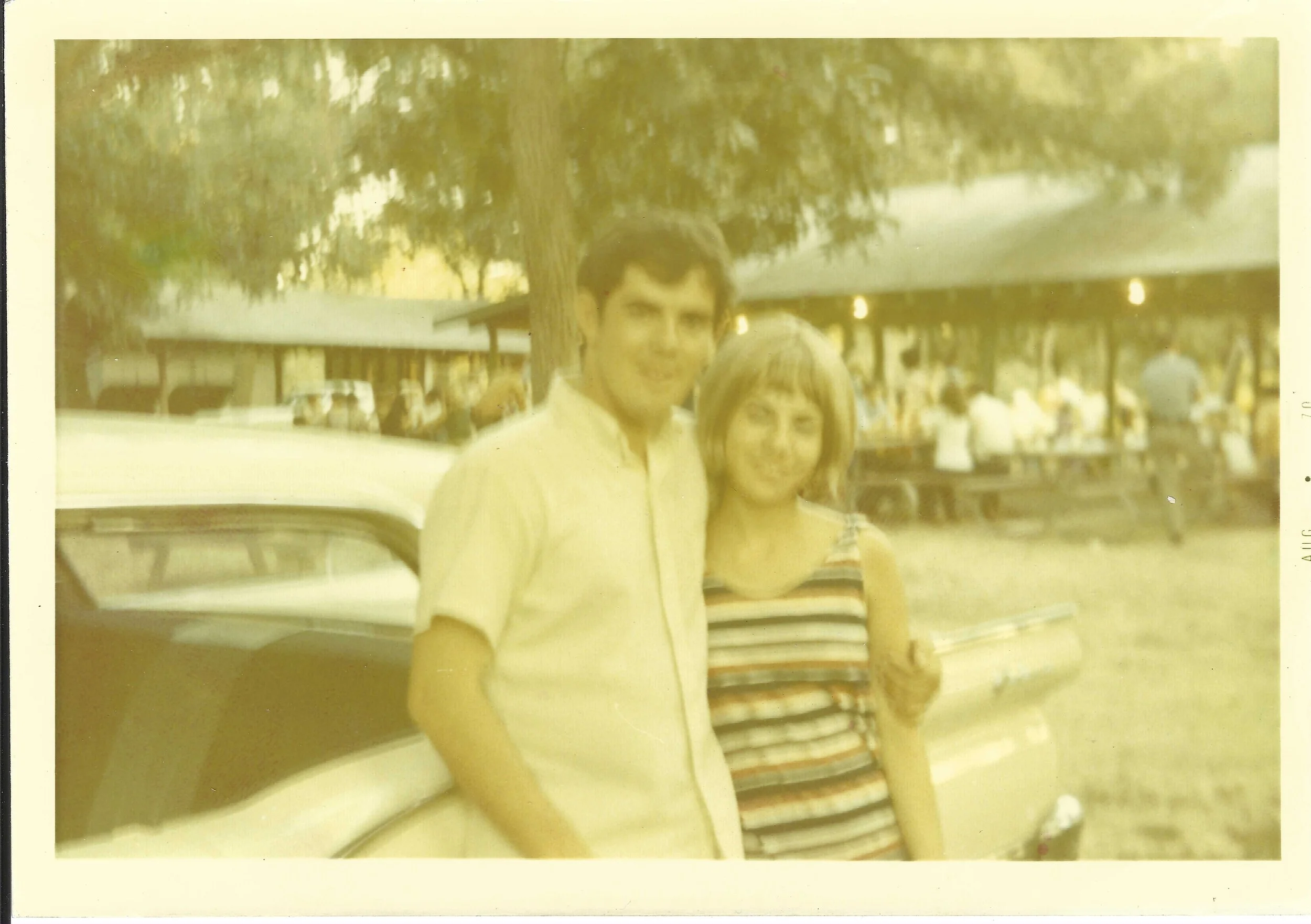

What did their faces look like from different angles?
How did they smile?
What did their hair look like?
What were their natural expressions?
How did their skin tone appear in other photographs from that time?
What details were consistent across multiple images?
When restoring a badly damaged or blurry photograph, especially one involving faces, you cannot rely on a single image. If the original photograph is too degraded, the missing detail has to be interpreted very carefully. The goal is not to invent a new face, but to rebuild enough visual understanding to restore the original person faithfully.
So I scanned the images using a flatbed scanner and also photographed some of the original prints when needed. Each image had its own issues. Some were faded. Some had color shifts. Some were soft or out of focus. Some had discoloration, paper texture, grain, or damage from age. Together, they helped build an identity foundation.
These supporting images became the key to restoring the more difficult ones.
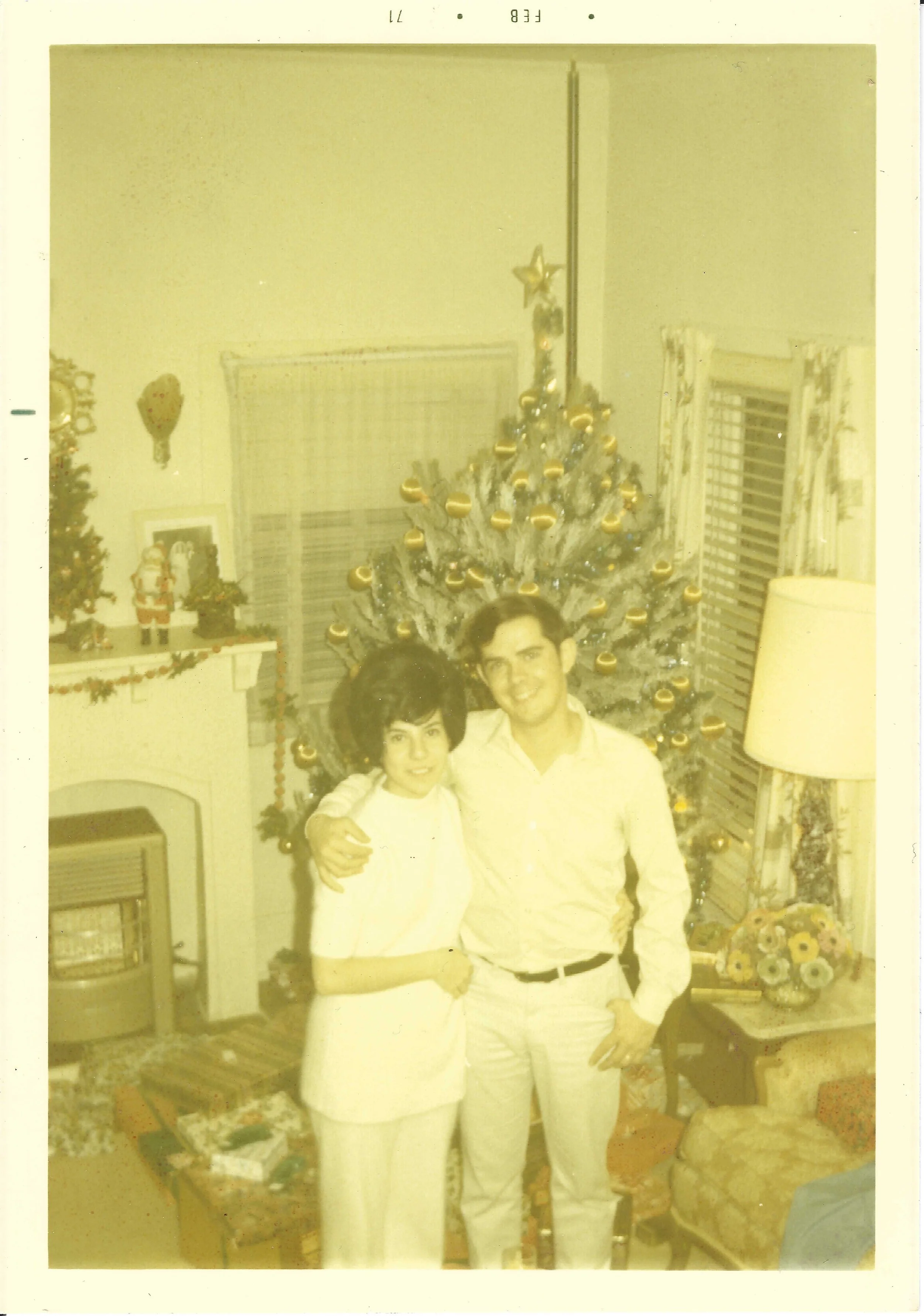
Starting with the Easier Images First
I did not begin with the wedding photograph. That image was too important, and too damaged, to treat as the first experiment.
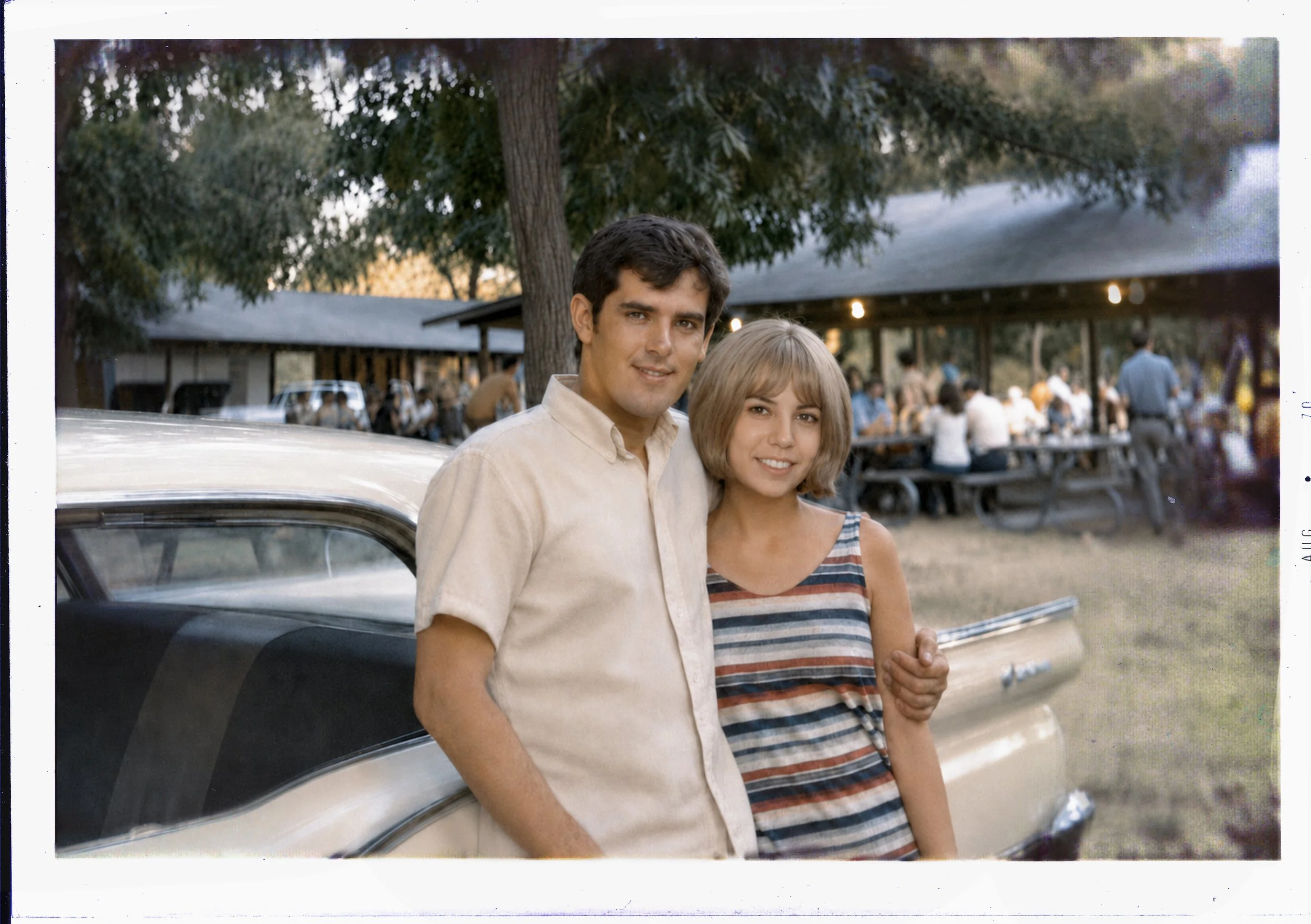
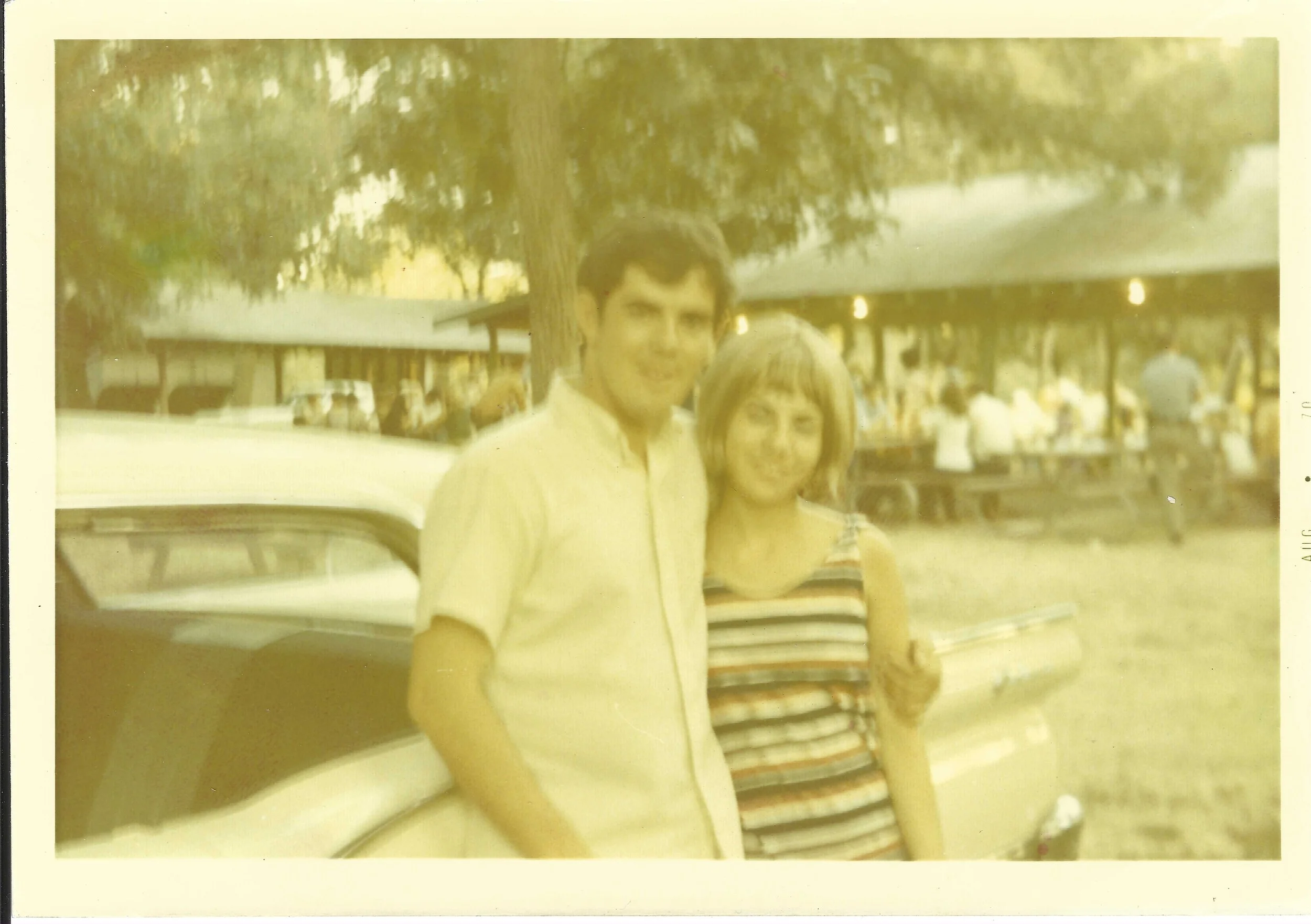
Instead, I started with some of the easier photos. These were images that needed lighter restoration: color correction, improved contrast, removal of fading, sharpening, and cleanup of age-related discoloration.
This helped me build a process.
Each image taught me something. Some needed careful exposure correction. Some needed skin tones brought back to a more natural place. Some needed yellowing or magenta color casts reduced. Some needed texture cleaned up without making the photo look fake or plastic.
That was one of the first major lessons of the project:
Restoration is not the same thing as beautification.
The goal was not to make the images look modern, airbrushed, or overly perfect. The goal was to preserve the people and the memory while gently restoring what time, blur, and damage had taken away.
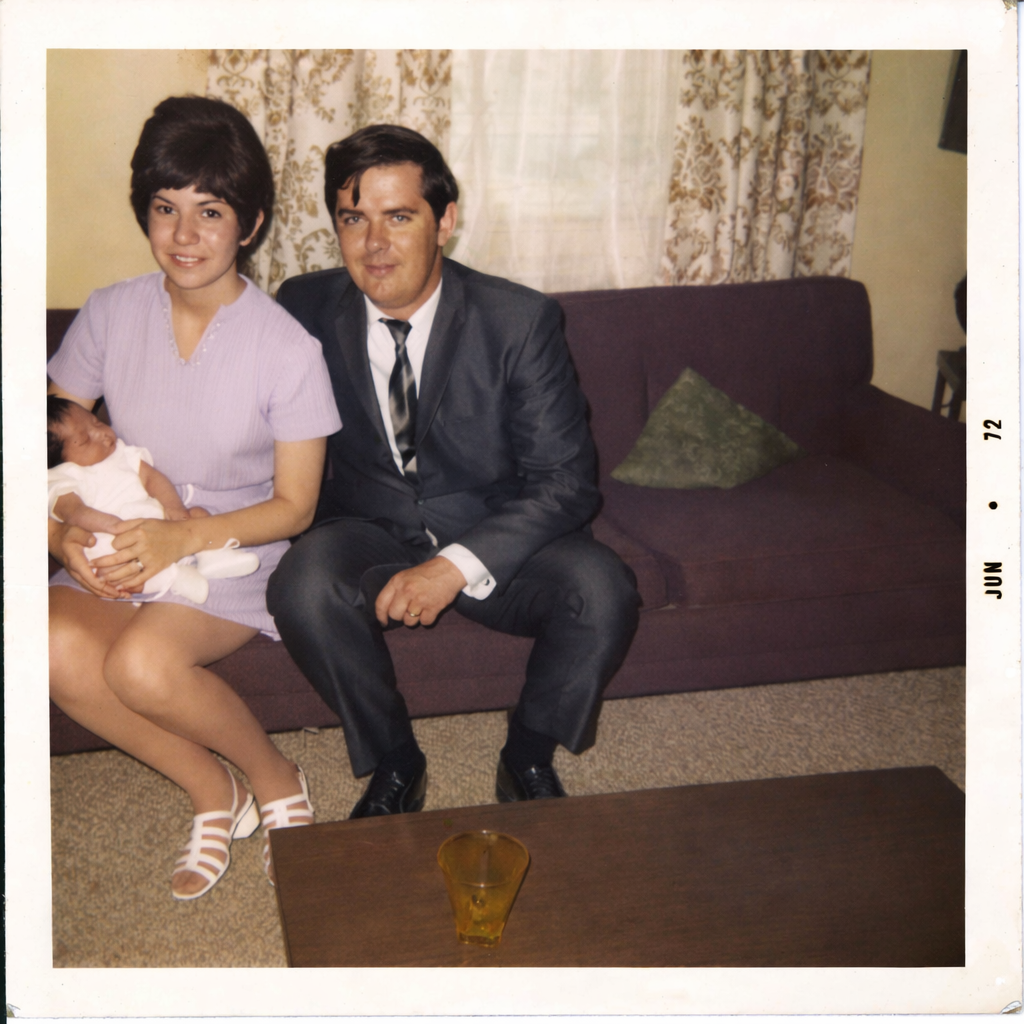
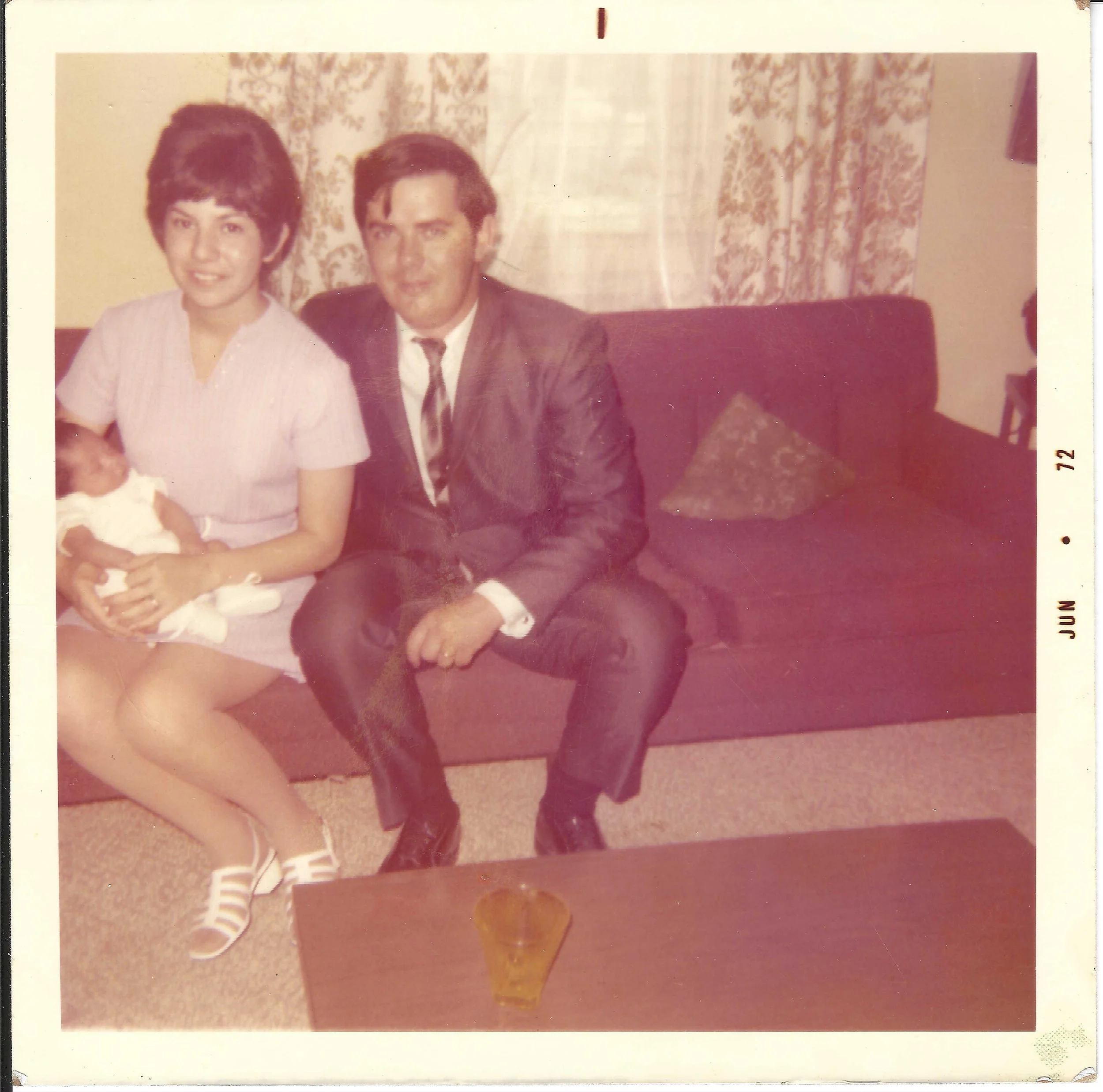
Preparing the Images Before AI
A lot of people assume AI restoration is a simple one-click process. It is not. Before an image ever goes into an AI tool, there is a lot of traditional restoration work that often needs to happen first.
For these photos, the preparation process included scanning, cropping, exposure correction, contrast adjustments, dust and artifact cleanup, color balancing, and in some cases manually reducing damage or discoloration in Photoshop.
This step matters because AI tools respond to the quality of the input. If the image going in is too distorted, too discolored, or too damaged, the AI may make strange assumptions. It may invent facial details. It may over-smooth skin. It may change hair, expression, or even the shape of someone’s face.
So the goal in the early phase was to give the AI the best possible foundation. That meant doing the unglamorous work first: cleaning, balancing, correcting, and preparing the file.
Only then could I begin testing AI-assisted restoration.
The Hardest Part: Preserving Identity
The biggest challenge was not simply making the photo sharper. The biggest challenge was keeping the people looking like themselves.
AI can be incredibly powerful, but it can also be too confident. When an image is blurry or damaged, the software may try to “complete” the missing information. Sometimes that works beautifully. Other times, it creates a person who looks realistic but no longer looks like the actual person in the photo.
That is where human judgment becomes essential.
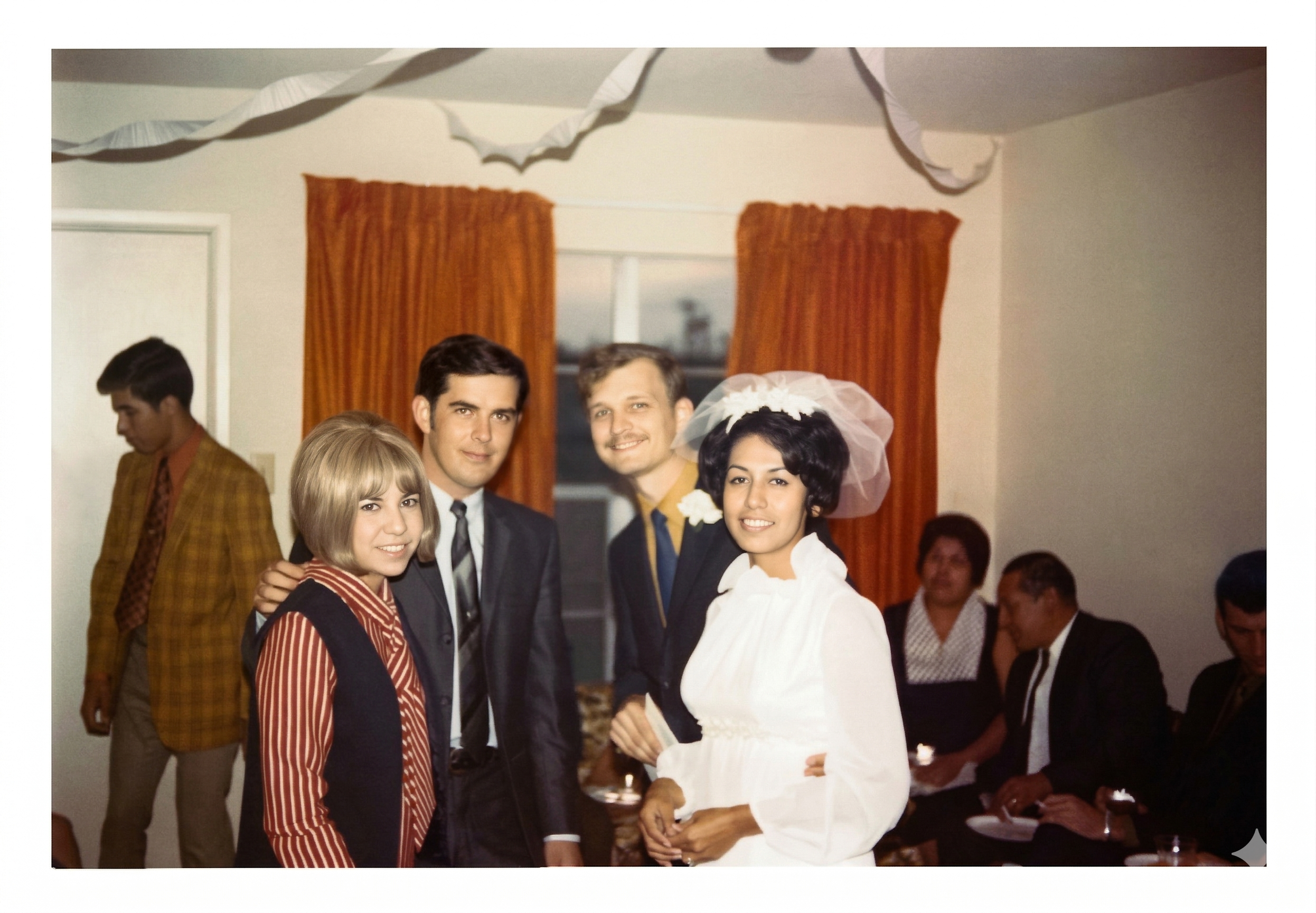
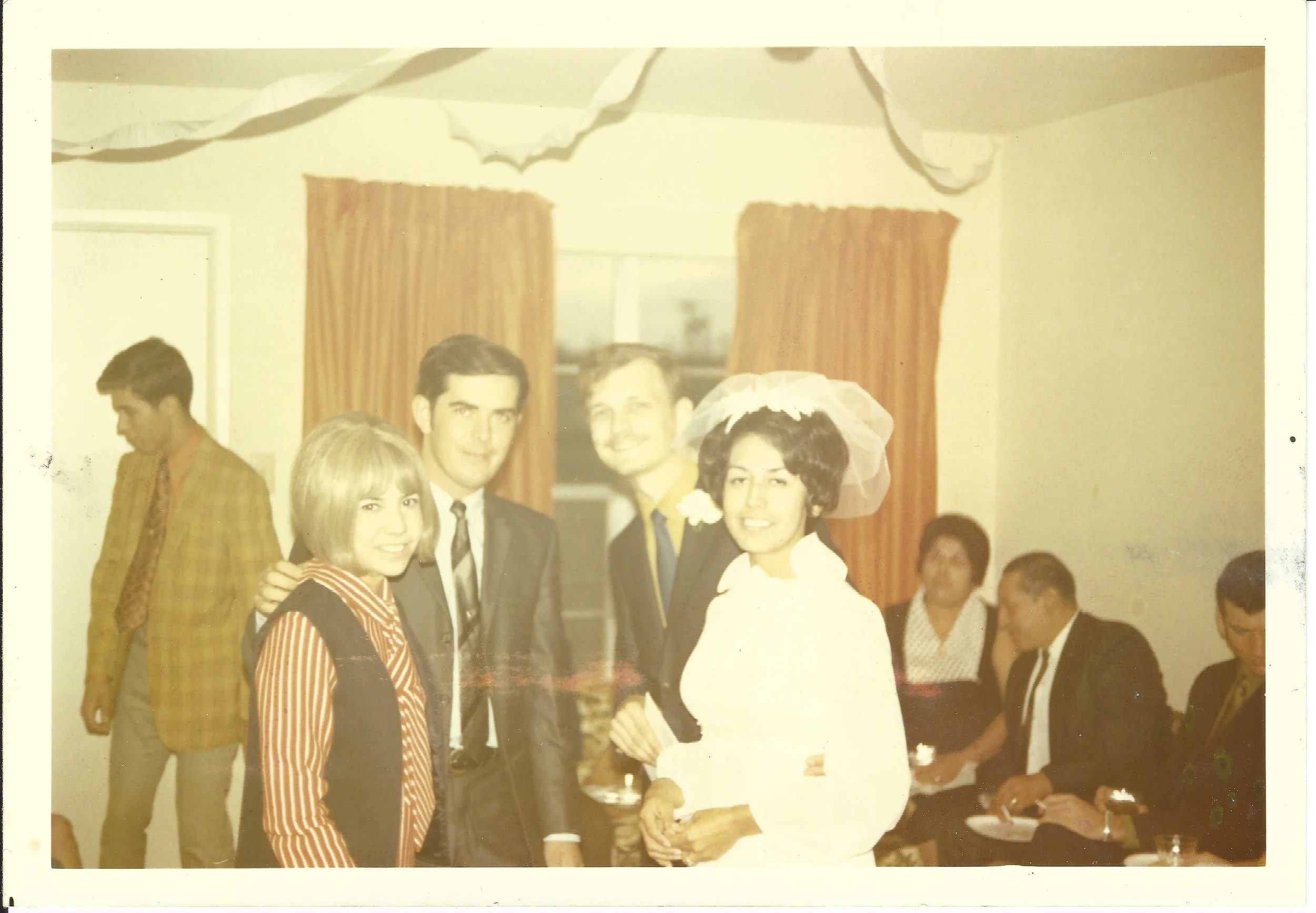
Throughout the process, I compared the AI-assisted results against the original image and the supporting reference photos. I looked carefully at the faces, smiles, hair, skin tone, and expressions.
Did the restored image still feel like them?
Did the hair stay true to the photograph?
Did the face look restored, or replaced?
This became the heart of the work.
A sharper image is not automatically a better image. If the expression changes, the memory changes. If the smile is wrong, the moment is wrong. If the face becomes too polished or too generic, the emotional value of the photograph is lost.
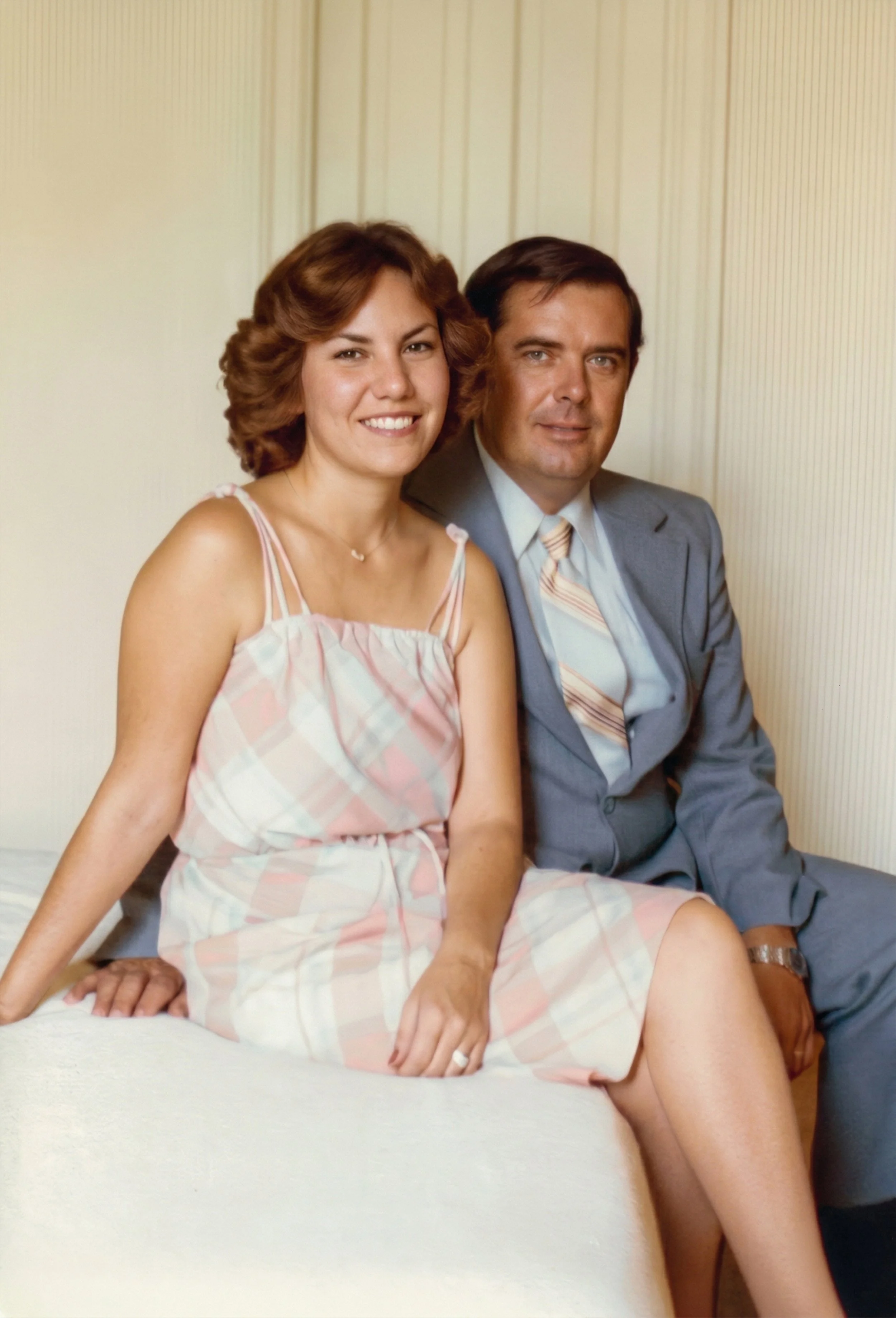
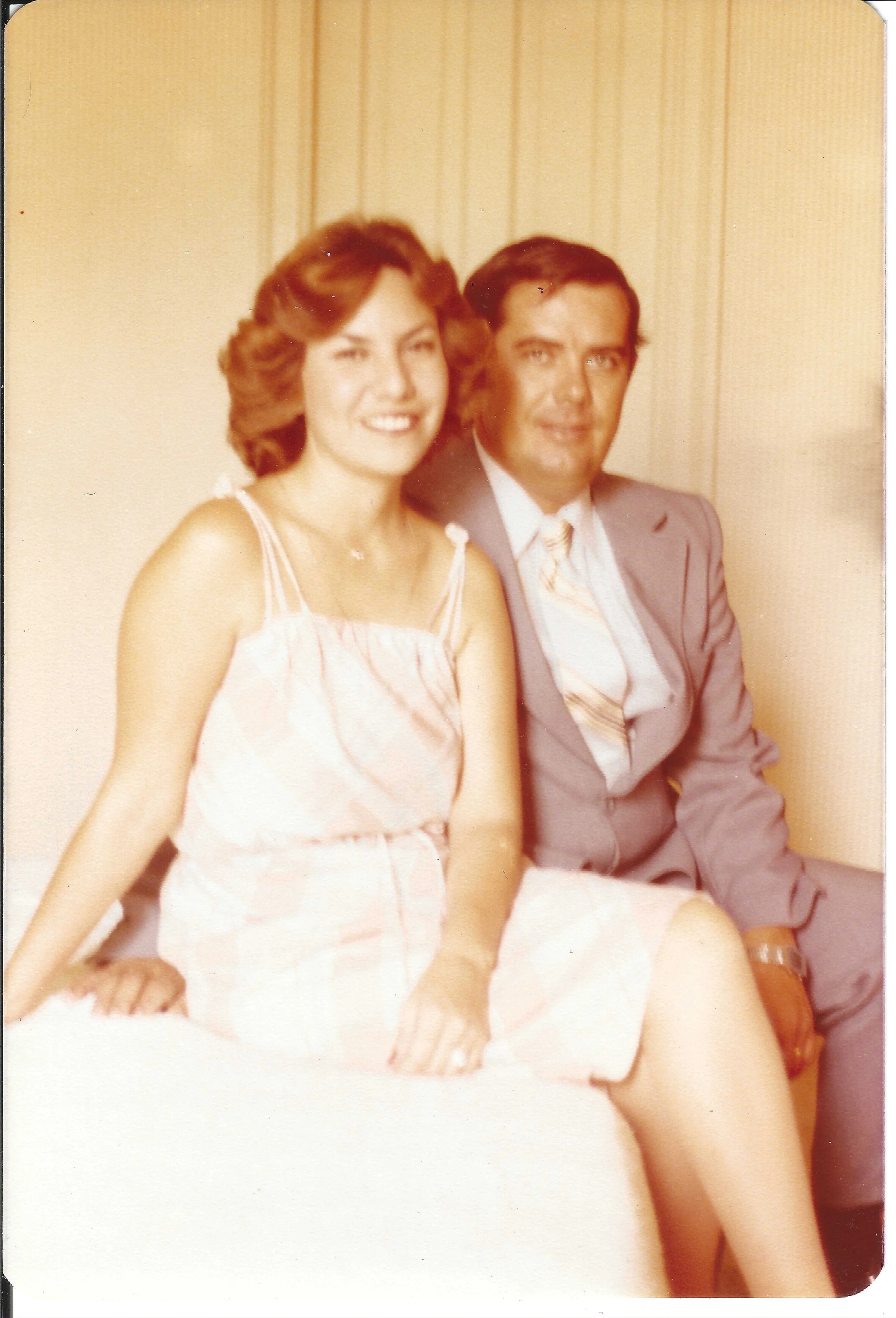
The Back-and-Forth Restoration Process
The work became a long back-and-forth process.
There were many attempts that improved one part of the image while hurting another.
One version might reduce blur, but change the face too much.
Another might improve the skin tone, but make the image feel too modern.
Another might sharpen the details, but alter the original smile.
Another might clean up the photo, but make the people look overly retouched.
So the process became slower and more deliberate.
Instead of trying to fix everything at once, I had to break the restoration into stages:
Protect the identity.
Preserve the expression.
Correct the color.
Reduce blur and improve focus.
Clean up skin, damage, and artifacts.
Upscale for final detail and print quality.
This was not a magic button. It was a negotiation between technology and memory.
AI could generate possibilities, but it still needed a human eye to decide what was faithful, what was too far, and what needed to be pulled back.
Color Correction and Natural Skin Tone
Color was another major part of the process.
Old photographs often shift over time. They can become yellow, green, magenta, orange, faded, or washed out. Scans and photocopies can exaggerate these problems even more.
In wedding images especially, skin tone matters. The photo needs to feel warm and alive, but not fake. It needs to look restored, not painted. It needs to preserve the natural humanity of the people in the image.
That meant carefully correcting color without overdoing it.
I wanted to avoid the overly orange, overly smoothed, overly processed look that can happen with AI restoration. The final image still needed to feel like a real photograph. A restored photograph, yes, but not a synthetic portrait.
The goal was natural skin tone, realistic texture, and a believable sense of light.
Knowing When Not to Change Something
One of the most important parts of restoration is knowing what not to change.
It can be tempting to keep pushing an image further. Sharper. Cleaner. Smoother. Brighter. More polished.
But at a certain point, restoration can become alteration.
For this project, it was important to preserve the original pose, expression, hairstyle, clothing, and feeling of the image. The goal was not to modernize the couple or make them look like a different version of themselves. The goal was to bring clarity back to the moment they already had.
That meant avoiding heavy retouching. No added makeup. No reshaped faces. No changed smiles. No reimagined expressions. No turning an old wedding snapshot into something that looked like a staged modern portrait.
The best restoration is often the one that does not call attention to itself.
It simply lets the memory breathe again.
Restoring More Than a Photograph
By the end of the process, what began as a damaged photocopy had become something much more meaningful.
The final image was not perfect in the way a modern wedding photo might be perfect. But that was never the goal. The goal was to bring back the feeling.
The couple.
The wedding day.
The memory.
The only image they had.
AI played an important role, but it was only one part of the process. Scanning, Photoshop, color correction, reference photos, careful comparison, and long hours all mattered. But most of all, human judgment mattered.
Because restoring a photo like this is not just about repairing pixels. It is about protecting a memory.
This project reminded me why photographs matter so much. A blurry or damaged image can still hold a whole lifetime of meaning. And with the right care, patience, and tools, some of those memories can be brought back to life.
Some of the most meaningful photographs are not the perfect ones. Sometimes they are the faded ones, the blurry ones, the fragile ones, or the only ones left.
If you have an old, damaged, faded, blurry, or nearly unusable photograph that matters to you or your family, I would be honored to take a look. Every image is different, and not every photo can be fully restored, but if the memory matters, it is worth trying.
More Than Pixels: Restoring a Lost Wedding Photograph
We Restored the Only Image from Their Wedding Day
Some photographs are more than photographs.
They are the only remaining proof of a moment. A face. A smile. A wedding day. A person as they were then, standing beside someone they loved, in a season of life they can never return to. That is what made this particular restoration project so meaningful.
It started when my neighbors reached out to me. They knew I was a wedding photographer, and they also knew I had experience with Photoshop, photography, and newer AI-based image restoration tools. They are in their 80s now, and they had a handful of old photographs they were hoping I might be able to help restore.
But there was one image that mattered more than the rest. It was the only photograph they had from their wedding day
If you have an old, damaged, faded, blurry, or nearly unusable photograph that matters to you or your family, I would be honored to take a look. Every image is different, and not every photo can be fully restored, but if the memory matters, it is worth trying.

do i need wedding video?
“Many weddings represent the last family reunion, the final dance with parents, or a parting glimpse of grandparents. Skipping wedding videography is most brides “biggest regret”. Cut the vague clutter to make room for the meaningful specifics. “
The Immeasurable Value of Wedding Videography
The sun had set, casting the world into twilight. As I navigated the winding roads, a blur of tears made the journey feel endless. Every turn and curve felt like an hour. The weight of the message I carried made my heart heavy, unsure of how to break the news to my wife. Her mother, my beloved mother-in-law, had suddenly passed away. A call from her devastated father, imploring me to deliver this heart-wrenching message, left me speechless.
As we came together, enveloped in grief, a treasure trove of old photographs became our solace. We lost ourselves in the memories, smiling at the snapshots of family vacations, and pausing at her radiant wedding pictures. The youthful glow in those photos felt like it was taken just yesterday. But as we searched for recent memories, we were met with a void. The camera had grown shy of her in recent years, a consequence of the extra pounds and a touch of self-consciousness. The stark realization hit us: just four cherished photographs captured her bond with our 4-month-old son. But videos? Those were even rarer. Oh, how we longed to hear her soft coos and infectious laughter as she cradled our baby.
Amid this poignant reflection, a silver lining emerged. Our wedding video from four years ago featured some of the most intimate and authentic moments of her. Although they were priceless, the longing for more remained.
For those in Austin, Texas, the average professional wedding videographer costs around $3,000, while Chicago stands at about $4,000. While this might seem like a significant chunk of your wedding budget, consider this: so many couples later regret overlooking videography. Photos are beautiful, but videos? They have the power to unlock a floodgate of emotions, immersing you into moments you might have forgotten, making you feel as if you're reliving the day.
As a wedding videographer, let me whisk you through the magical world of capturing moments, and champion the cause of memories over dollars. Here's the truth:
"Cut the vague clutter to make room for the meaningful specifics."

You might grapple with the conundrum of desires vs. budget. But, allow me to be the voice of your "future self." Two decades from now, the amount spent today will pale in comparison to the richness of the memories you possess.
Your wedding video is more than just a fleeting Instagram sensation. It's a legacy. It's the warmth in your mother's voice, the tenderness of your great aunt's embrace, and the surprise slow dance with your partner. It's the timeless memory you'll share with your descendants.
Two years ago, when I bid farewell to my mother-in-law, the video clips from our wedding became our solace. They showcased her in her element, vibrant and joyous. Now, in hindsight, I would give anything, even forgo lavish decorations or a grand cake, for a few more of such moments.

Many weddings represent the last family reunion of sorts, the final dance with parents, or a parting glimpse of grandparents. Allocate your budget wisely to honor these irreplaceable memories. Hire a professional filmmaker who recognizes their worth.
Are you on the fence about wedding videography? Dive deeper into its value in my detailed blog: The price of wedding photography & videography.
Because videography shouldn't just be an afterthought. For many, including me and my couples, it stands shoulder-to-shoulder with the venue and photography. If you're about to embark on this beautiful journey, reach out. Let's treasure these moments forever, together.

do i need a wedding videographer?
Skipping wedding videography is most brides “biggest regret”. Cut the vague clutter to make room for the meaningful specifics. Average cost of wedding video is something to think on but not something that should keep you from your memories...

I was driving home tears streaming down my face. I didn’t know what to do, what to say, who to call. I texted an older gentleman from my church. “Please pray!” my mother in law had just passed away suddenly. It was 7pm and my father in law had called. He couldn’t bring himself to tell my wife over the phone. He asked me to tell her! I was an hour away from home. That was a long car ride…
When prepping for the funeral we looked back through all the old photos. Vacations, snapshots and then her Wedding photos. She was beautiful. When we were looking for more recent photos however we were shocked. There weren’t any. Not nearly as many as her younger years. She had gained a little weight and was camera shy. We soon realized that we only had 4 total photos of her with our new baby and he was 4 months old. We had no video… What we would have given to see her hold and cuddle her grandson. To hear her voice and laugh as she held him. She loved him so much.
Some of the ONLY videos we had of her were from our wedding 4 years prior. The videos we have are priceless, but we still wish we had more.
The average cost of a professional wedding videographer in the Austin Texas area is around $3,000 and in Chicago its about $4,000. That can be a real line item in a budget, but skipping on videography is one of the “biggest regrets” most couples have and for good reason. The sounds and visuals from video can bring back emotions and memories locked away you never even knew were their. The connection you get from video is very different than that of photo. In some ways its deeper, more personal, and more visceral.
As a wedding videographer hopefully I can help guide you through this topic a little and advocate for your memories over dollars. You are going to have to make sacrifices… You are going to cut the vague clutter to make room for the meaningful specifics, but in the end you will be glad you did.
“Cut the vague clutter to make room for the meaningful specifics.”
What you and every other couple will struggle with is something very personal. Wants Vs Budget. I’m going to advocate for your “future self”. The few thousand dollars you will spend now is literally not going to mean anything to you 20 years from now. You will be so glad you have those memories.
Wedding video is not just for an Instagram post, but it's something you can show to your children and grandchildren. You want something that takes you through the emotions of the day... You want the voice of your mother, the embrace of your great aunt, those moments of your parents dancing on the dance floor to show to your children, your slow dance with your guy that you never dreamed he would agree to... You want your memories.
I’m just gonna be real, some of the only things you’re gonna have from your wedding to remember your day, is the photography and videography. And there’s a huge difference between the two.
When I lost my mother-in-law two years ago, we were so grateful that we had video of her from our wedding. She was not one who likes to be on camera. But at our wedding she was dressed up nice and felt good about herself, and was in a bunch of photos and video. I can’t tell you how much money I would pay now for even a few more videos of her. Hearing her voice, and seeing her having a great time was more than priceless. I honestly think if it was down to having a cake, or centerpieces, or even cutting down the guest list, versus having a video I would recommend people cut whatever they need to cut to make sure they have professional wedding videographer capture their memories. When this is all over those are the only things are going to have left 20 years from now. For most people it’s their first and last family reunion, it's their last dance with their mom and dad, it's the last time they will see their great aunt and their grand parents. Taking the time to build a budget that respects those moments and memories is well worth the time and financial investment it takes to hire a professional filmmaker.
If you are looking for what you should be thinking about when hiring a wedding videographer check out my detailed blog about it. “The price of wedding photography & videography” https://www.filmandframe.com/mainblog/cost-of-wedding-photo-and-video
When it comes to videography it really shouldn’t be a difficult decision. For me and my couples it's not an afterthought, it's right up there at the top of the list with booking the venue and photographer.
The price of wedding photography & videography
How to pick a photographer or videographer who dosn’t suck!
selecting a videographer or photographer who doesn't suck!

When selecting a videographer or photographer sometimes it can be hard to find the perfect balance between budget and quality. There are many factors that go into pricing and selecting either, everything from gear, experience and talent to expenses, market conditions, and the location of your wedding.
I wish I could say photo is $X,XXX and be done with it… but that won’t really help you or anyone else. Each creator puts a lot of thought into pricing, its usually not just a random subjective number. This is going to be a long comment, but it should give you everything you need to know when budgeting… Take the following into consideration:
Location
If you are looking for a videographer in Brady TX its going to be cheaper than in Austin or Dallas. Bigger populations tend to have higher prices but more professional talent available.
Experience
Anyone in business for a while should have LOTS of weddings under their belt (I have filmed over 100 weddings myself). (And I’m still learning might I add) They should also have a pretty good understanding of their expenses and will tend to have higher prices, not just because they are worth more (and they are) but because they know what it truly costs to be in business. The quality and reduction of risk their expertise and experience brings is well worth that extra cost.
Artistic style and Talent
You should be looking at this as hiring an artist, they are making a work of art and different artists come with different levels of talent. You should expect to pay a higher price for a more talented artist. If a videographer's film of some stranger is making you cry there's a reason for that and the videographer who created that film will be in higher demand and thus worth more.
Hours of coverage
It's really difficult to capture the whole day in 6 hours. There is just too much going on. Average wedding is about 8 hours and the max I've seen is 12 in a day BUT I know videographers and photographers who have spent many days traveling around the world with a couple leading up to their wedding. Your timeline should dictate the hours of coverage not necessarily your budget.
In most cases there is no reason to cover more than 10hours on the wedding day. From a story standpoint usually there is not too much happening after the dance floor is open, unless there is some kind of sparkler exit. But this is something a good/professional vendor will discuss with you. Your Photographer and videographer will be able to help you plan and mold your timeline that will support your vision and what they need to accomplish it.
Length of edits and Prints
Typically adding edits or requesting a longer edit is going to cost more. I personally offer a sorter highlight film which is a creative film focused on the couple and their story (my couples love it) and then as couples select larger packages they can add a 20minute documentary or full edits of their ceremony or other parts of the day.
Equally adding albums, prints, frames, thank you cards will all cost more. It's worth it to work with your photographer to get high quality prints on archival paper so that your photos and albums look stunning 20 years from now. Trust me there is a MASSIVE noticeable difference between what is printed through a professional studio and Walgreens. All of these things, of course, will affect the price.
So this is my honest assessment as to pricing even if it makes some couples and vendors uncomfortable...
It's going to be harder to find reliable well established artists who have experience, and know their style and craft at a lower price! This is not a knock on low prices or beginners (everyone starts somewhere) it's just the honest truth. We all started here... Everyone has a good camera these days but not everyone is meant to be a wedding videographer. You can find great hidden talent BUT When working with someone new they inevitably have less experience and gear SO you need to work extra hard at vetting any new or low cost videographers or photographers.
Budget Vs Quality (IMO)
Amateurs under $1,000 (Don’t Hire)
Theses people are learning with your wedding OR are “Fly by night studios”. Theses Amateurs have no clue how to filming your wedding, will be horrible at communication and will cancel at the drop of the hat. Or worse are just scamming you! You will have called them 10 times gotten no answer only find out a week before your wedding that they forgot your wedding date and are “building homes in another country” and unable to film your wedding… (I should know, it happened to me)Hobbyists $1,200-1,600 (Probably Don’t Hire)
Hobbyists will be hit or miss you might get someone amazing, a new kid fresh out of college eager to put in the work, or a talented mom picking up her long lost love for photography, BUT you could also get someone who really has no idea what they are doing or who doesn’t take their work seriously and are using your wedding as practice to build their “portfolio”. (“Building my portfolio” is code for “I’ve never done this before and have no idea what I’m doing and will probably mess this up” )Cheap Studios $1,200-2,000k+ (Probably Don’t Hire)
A cheap mass market studio’s priority is “quantity over quality” they cut corners and send people with less experience to service large amount of weddings so they can maintain a good profit margin. Good profit margin is great for business BUT in a people intensive industry to keep those margins they MUST sacrifice quality and customer support. It can be hard to find a mass market studio that can create amazing films, have great customer service and a low price, inevitably corners get cut somewhere, so be sure to really check the reviews.Solo Professionals $1,700-2,500k+ (Consider Hiring)
This is where you will start getting good wedding video and photo professionals. They have invested in their craft and are serious about working hard to make you happy. They have experience enough to know their worth and charge appropriately.Small studio owner operators $2,500k-$4,000 (Hire)
Theses owners and artists may shoot solo or bring a professional team of artists to your wedding. They walk you through their work and help you find the perfect package. They have years of experience or at least a large volume of work that is easily verifiable. You should expect artistry, professional service, great communication and a beautiful end product and film (This price and above is also where you can start finding great talent)A boutique high end studio or solo artist $3,000k-$6,000 (Hire)
With theses creators artistry and craft is foremost. You should expect amazing artistry, professional service, great communication and a beautiful end product which looks and feels unique to that artist. You should be able to look at a collection of work and be able to pull theirs out with constancy. Their style is unique to them.Destination Filmmaker / Photographer and artist. $5,000-$15,000 (Hire if they are available)
Theses artists have a limited schedule and only take a limited number of weddings a year. If you are not a good fit they will let you know. You are hiring them for their mission and will plan your wedding schedule around their vision and style. They are leaders in their field and willing to travel. They will sometimes bring a team and sometimes shoot solo; they are artists not vendors. And their work is top of the pack for a reason.Celebrity Filmmakers / Photographers and top artists. $20,000-$40,000+ (Um duh… Hire them if you can)
You're hiring theses artists for their impeccable work and world renown reputation. These are the Filmmakers and Photographers that select you not the other way around. They are published on websites and in blogs, work with celebrities and book years in advance. If they are available and you can afford them you are getting the best in the world.
Budgeting
The truth is you only have so much money. Join the club. We all want the Lexus but can’t always afford it.
I’m going to be an advocate for your future self. 20 years from now spending an extra $1000 on your photographer or videographer is going to mean very little… but if it's the difference between getting a fly by night newbie who looses your footage and having the images of the last time you danced with your dad I will tell you this… SPEND THE MONEY!
I would suggest setting your budget and see what you can find in that range BUT if you are on a tight budget and the artist you want is just out of reach be flexible with other things (say ditching the candy bar and the turtle doves) cut something else you don’t really need or want to build a great budget for something you do truly want.
Final thoughts.
I would staying away from Cheap Studios and Amateurs.
Only consider Solo Hobbyists if...
1) you know and trust them and have someone who can vouch for their character. 2) Have seen and feel comfortable with their limited work. 3) You keep good communication with them. (Sometimes when it's just a hobby it takes longer to get things done.)
At every other price point you should be fine, BUT as always the saying “You get what you pay for” really rings true in this industry.
Lastly…
Always insist on signing a contract, a deposit of 30%-50% is very common and you should expect to pay your remaining balance in full 30 days before the wedding.
Hope this has helped if you want to read more blogs like this please drop a comment below and let me know!